All posts by Julie Gisbon

Transfer Now to Finish the School Year Strong!

Receive 10% savings on your last month of tuition when you enroll by February 28.*

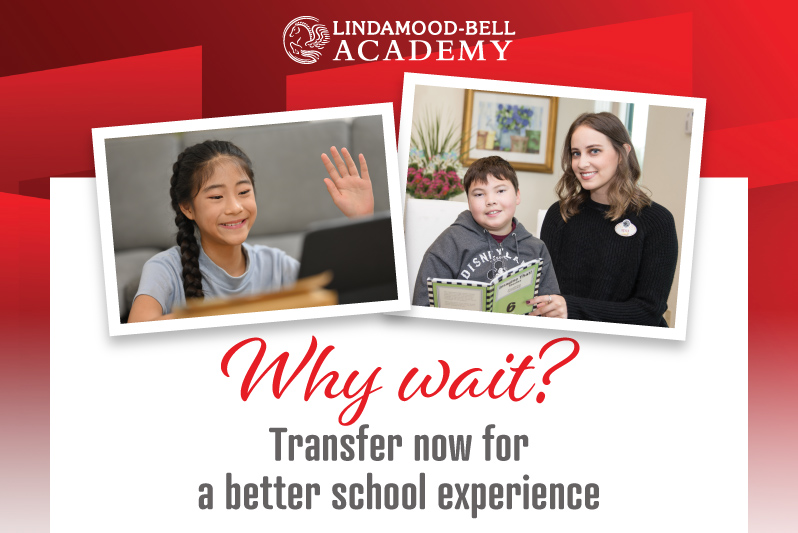
Don’t wait until next school year to make it happen. It’s time to switch to a better school environment that offers personalized support and a positive experience for your child. We offer live-online and in-person instruction.

With Lindamood-Bell Academy, your child can smoothly transition to an ideal school environment with dynamic instruction, whether live online or in person. The Academy’s rolling admissions make transferring right now easy.

Our highly personalized approach to education is unique. It combines our renowned, evidence-based instruction with a standards-aligned curriculum. Our engaged, caring staff will tailor a learning plan to your child’s specific learning needs and implement it with an eye to quality and stability. 

Discover how rewarding and beneficial Lindamood-Bell Academy can be with our virtual tour.

Get in touch with us to learn more.  

*Must enroll by 2/28/25. Must enroll through the end of the school year, May 30, 2025. Discount applied to the final month’s tuition.

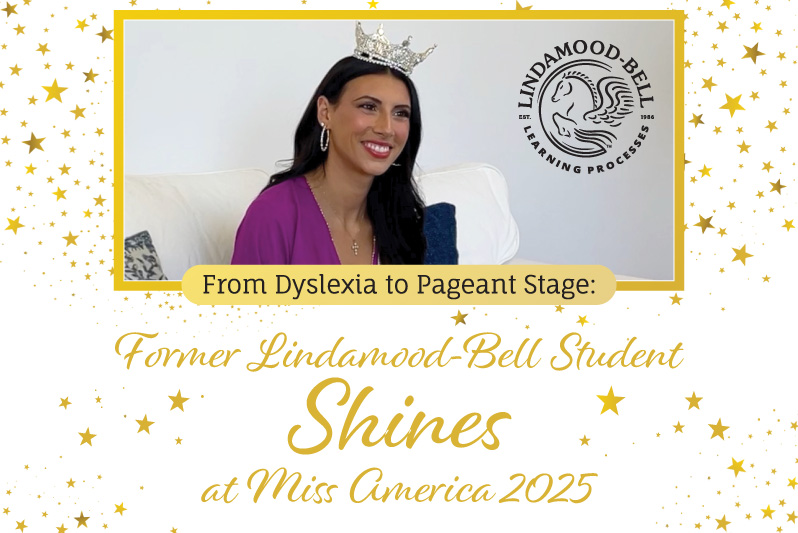
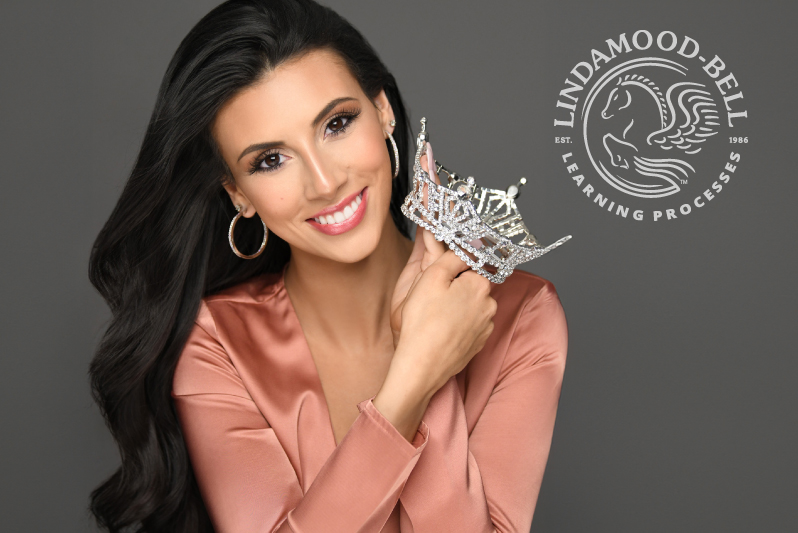
A Student’s Inspiring Journey from Dyslexia to the Miss America Pageant

Miss Massachusetts 2024, Kiersten Khoury, was diagnosed with dyslexia as a child. Her journey with Lindamood-Bell began in fifth grade, where she received support as a student. Today, she uses her platform to champion literacy and inspire others on their reading journeys.

As Miss Massachusetts, Kiersten proudly represented her state at the Miss America pageant on January 5, 2025.


Watch her inspiring story.


At Lindamood-Bell, we develop the imagery-language foundation for reading, spelling, language comprehension, math, memory, and critical thinking.

Online Instruction Available Anywhere

(800) 233-1819 

A Message from Our Co-Founder Regarding the Wildfires


The wildfires affecting Southern California have brought devastating loss and disruption to our communities. I am deeply saddened to share the heartbreaking news that our Pacific Palisades Learning Center has been lost in the fire. However, it is with immense gratitude that I can tell you all of our employees and students are safe.   

Our Pasadena and Westwood Learning Centers are closed until it is safe to return as we continue to prioritize the safety of everyone involved.

We are committed to supporting our employees during this challenging time and our hearts are with everyone affected by these tragedies. Please join me in keeping our employees, students, and their families in our positive thoughts and prayers.


Nanci Bell

Lindamood-Bell Co-Founder and CEO

Emergency Relief for Students Affected by the LA Fires
The recent Los Angeles fires have disrupted the lives of many families and students. At Lindamood-Bell, we are here to support students during this challenging time, helping them maintain academic progress and stability. Families can choose to finish the school year with personalized, comprehensive academic support through Lindamood-Bell Academy, or pursue targeted, one-on-one instruction to overcome academic challenges at our Learning Centers.

Both options provide the care, support, and excellence you expect from us. Contact us today to learn more about our Emergency Relief options and how we can help your student succeed.

Miss Massachusetts 2024 Kiersten Khoury, Former Lindamood-Bell Student, Ready to Shine at Miss America 2025

HINGHAM, Mass., Dec. 30, 2024 /PRNewswire/ — Former Lindamood-Bell student Kiersten Khoury, crowned Miss Massachusetts on June 22, 2024, is preparing to represent Massachusetts at the 2025 Miss America Pageant on January 5 in Orlando, Florida. An inspiring testament to perseverance and possibility, Ms. Khoury overcame her childhood struggles with dyslexia by learning to read and thrive at school.

Ms. Khoury has transformed her difficulty learning to read into passionate advocacy for literacy and education. Both on and off stage, she has shared her inspiring journey—from a student who faced challenges in every aspect of school to a seasoned pageant competitor—embodying determination, grit, and resilience. Diagnosed with dyslexia in the fifth grade, she spent a summer immersed in intensive reading instruction at Lindamood-Bell’s Hingham, Massachusetts Learning Center. After her summer at Lindamood-Bell, she entered the sixth grade reading at a tenth-grade level. “Dyslexia doesn’t just affect your English class,” Ms. Khoury says. “It affects every class you take…Every area of school I struggled in because of dyslexia.” As Miss Massachusetts, Ms. Khoury’s community service initiative focuses on redefining dyslexia by “turning challenges into superpowers.”

“Kiersten is a wonderful example of someone who has overcome learning challenges and achieved her dreams,” said Lindamood-Bell Director of Communications Erin Bell. “We are so proud of her many accomplishments and wish her the best of luck at the pageant.”

Find out more about Ms. Khoury’s pageant journey and how she overcame dyslexia on her website at http://www.missmass.org/ or on her Instagram page @kiersten.khoury.


About Lindamood-Bell Learning Processes


Lindamood-Bell believes that all children and adults can learn to read and comprehend to their potential. For nearly 40 years, their evidence-based instruction has changed the lives of individuals with learning challenges such as dyslexia, ADHD, and autism. In addition to their 50 Learning Centers, they provide professional development for educators worldwide and engage in peer-reviewed research with universities, including MIT and Stanford. Visit www.lindamoodbell.com to learn more.

Contact: Erin Bell, Director of Communication, (805) 541-3836

“Our dream came true!”

Steven’s parents, Vanessa and Angel, learned early in the school year that it was challenging for their son to keep up in a large, accelerated kindergarten classroom. When extra tutoring and reading time at home was not helping, they turned to Lindamood-Bell to get their young son’s reading on track.

Parents get help to put their son’s reading on the right track.


It’s not too late for summer learning at Lindamood-Bell. Our instruction is personalized to meet the learning needs of each student in a short amount of time. Because it’s one-to-one, we’ll focus on your child’s specific needs for maximum growth. Learn about our summer programs here.

Call your Learning Center now to schedule:

Double Bay (02) 9328 7119 | Chatswood (02) 9410 1006

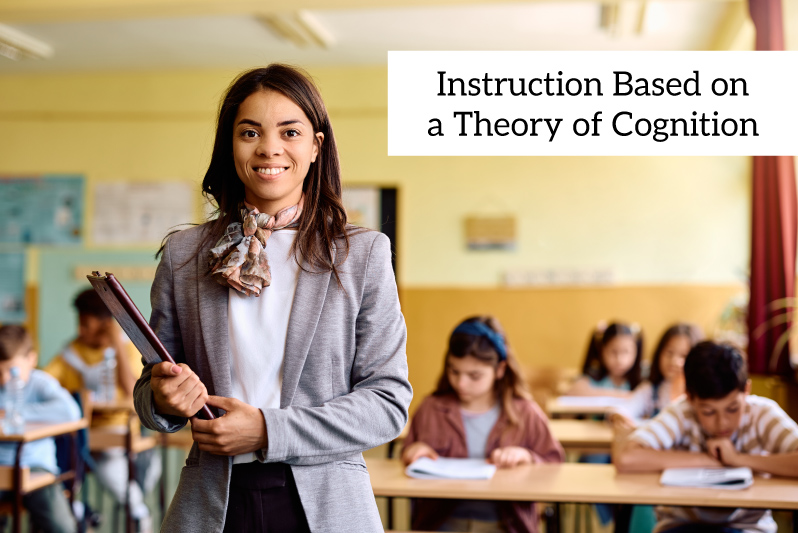
Instruction Based on a Theory of Cognition

At Lindamood-Bell, our instructional approach aligns with a specific theory of cognition known as Dual Coding Theory (DCT). In this article, we’ll explore DCT and its practical applications in teaching, showing how a cognitive approach can boost literacy and comprehension.


The Imagery-Language Connection for Literacy

instruction using the theory of cognition

The following section is excerpted from Visualizing and Verbalizing® for Language Comprehension and Thinking, V/V® Teacher’s Manual, Second Edition (2007) by Nanci Bell:

“Language comprehension is the ability to connect to and interpret meaning for both oral and written language. It includes the ability to recall facts, get the main idea, infer, conclude, predict, and evaluate. Language comprehension is a cognitive act. Instruction in comprehension must align with a theory of cognition. 

“The Visualizing and Verbalizing program (V/V) emerged from an experiential base, not a theoretical base. Years of experience teaching students to comprehend oral and written language eventually led to the sequential steps of V/V, a program specifically designed to develop language comprehension and thinking. In time, I learned that the principles of the Visualizing and Verbalizing program align with one of the most prominent theories in cognitive psychology—Dual Coding Theory. 

“Allan Paivio, a cognitive psychologist, researcher, and the originator of Dual Coding Theory, has written extensively about the role of imagery in cognition. Paivio (2006) explains that ‘As its name suggests, the theory is based on the assumption that thinking involves the activity of two distinct cognitive subsystems, a verbal system specialized for dealing directly with language and a nonverbal system specialized for dealing with nonlinguistic objects and events.’ 

“Paivio and Mark Sadoski (2001) specifically connect Dual Coding Theory to language processing for reading: 

Dual Coding Theory is the general theory of cognition that provides our unifying framework for literacy. This theory offers a comprehensive account of both verbal and nonverbal cognition. The inclusion of nonverbal aspects of cognition such as mental imagery is the most novel facet of this approach in a modern context, but it provides a comprehensive account of the verbal, linguistic aspects of cognition as well. Accordingly, it provides an explicit psychological account of literacy’s most central but elusive ingredient: meaning. 

“Sadoski (2006) simplifies the theory: ‘Dual coding theory is a theory of mind in which all cognition consists of the independent activity of, or interplay between, two great mental codes: a verbal code specialized for language and a nonverbal code specialized for knowledge of the world in the form of mental images.’ The theory that more than just a single, verbal code is needed for language comprehension is consistent with my numerous years of experience teaching students to comprehend and interpret language. Without the sensory information of imagery, words have no meaning, neither individually nor connected together to form concepts. The single code of language cannot do the job alone. Imagery plays a role in both concrete and abstract language comprehension. 

“Both codes are based on a substrate of imagery, or mental representations. DCT is distinctive from other theories of reading in that processing – activation of memory for decoding sounds and letters or getting meaning from language – can occur between two sensory modalities (verbal and nonverbal), whereas other theories of reading account for one modality (verbal), including reading models for phonics, morphology, and syntactic/semantic artifacts of literacy.

“Clinical research and experience over the last twenty-five years indicate that there is a language comprehension disorder that unfortunately is rarely identified. This separate comprehension weakness often undermines the reading process and goes beyond use of context, phonological processing, word recognition, oral vocabulary, prior knowledge, and background experience. It is a weakness based in the sensory system in creating an imaged gestalt.” 

For decoding and encoding, the brain’s imaginal sensory system (the sensory forms of information used to load memory) includes phonemes and graphemes in a multisensory fashion in the auditory and visual systems, respectively, necessary to read and spell fluently. In DCT, visual memory and auditory/articulatory memory are integrated for word reading skills.   

As students learn sounds and letters and begin decoding words with phonemic awareness, DCT then accounts for recognition of familiar spelling patterns and memory associated with word recognition. This enables automaticity in decoding, which is necessary to become proficient in the reading process.  As Sadoski, McTigue, and Paivio (2012) describe:   

“Based on our reading experience some associations [of orthographic conventions or context] become so high in probability that they become overlearned and “automatic.”   

“This is the DCT account of automaticity, the term used in the LS model to indicate the rapid association of a spelling with a pronunciation with little or no conscious attention.”

Automaticity – essential for word recognition, fluency, and comprehension – is often weak for readers who need stimulation in imagery (mental representations), enabling them to store and access words in memory. 


Sensory-Cognitive Instruction for Reading and Comprehension
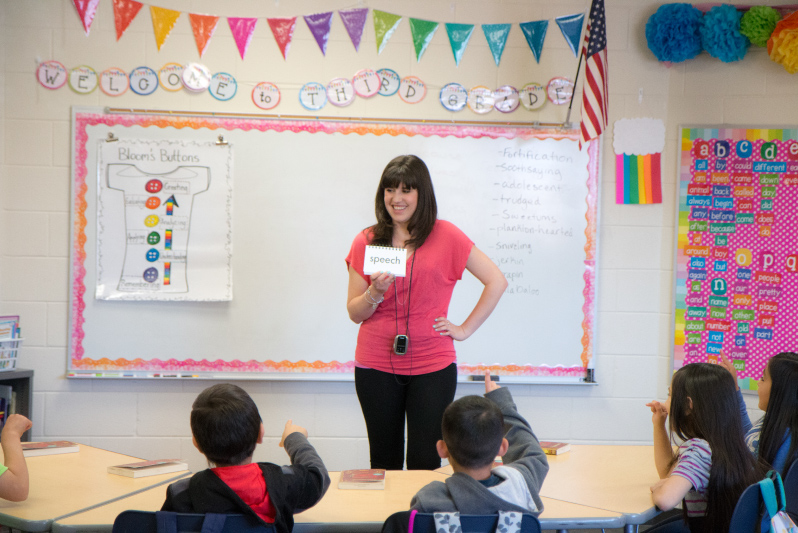
Instruction in the theory of cognition

Reading is not just a learned skill but a cognitive act, requiring that any effective approach to reading aligns with core cognitive principles. Learning to read involves the multisensory integration of auditory (phonological), visual (orthographic), and linguistic processing, as well as cognitive functions like mental imagery, working memory, long-term memory, and metacognition.

To build skilled readers, it is crucial to understand the sensory-cognitive factors underlying essential reading skills, such as letter-sound knowledge, phonics, orthography, fluency, vocabulary, and comprehension. Phonological awareness, an important sensory-cognitive skill for reading, is widely recognized as essential. Patricia Lindamood, one of Lindamood-Bell’s founders, pioneered much of the research and development around phonemic awareness, underscoring its foundational role in reading development.

Beyond phonological awareness, Lindamood-Bell emphasizes two other sensory-cognitive processes that are often overlooked yet crucial for literacy and learning: symbol imagery and concept imagery. These processes play a fundamental role in a student’s ability to decode text and understand its meaning. For many struggling readers, these two factors are missing or underdeveloped, and most instructional methods do not focus on explicitly developing these skills. Symbol imagery aids in the visualization and recall of sounds, letters, words, and spelling patterns. In contrast, concept imagery supports comprehension by enabling students to form mental representations of oral language and text.

This emphasis on imagery is rooted in the well-established cognitive theory known as Dual Coding Theory (DCT). DCT suggests that cognitive processes involving both language and imagery significantly enhance memory, comprehension, and critical thinking. It sheds light on how mental representations, memory, and metacognition impact learning outcomes.

Today, a typical reading approach focuses heavily on phonological awareness and phonics, often with insufficient emphasis on orthographic processing, fluency, or comprehension—all of which are essential for reading automaticity and proficiency. While phonological awareness and phonics are critical foundational skills, they are not sufficient on their own. For struggling readers, it is essential to address the sensory-cognitive skills of symbol imagery and concept imagery, which amplify their potential to grasp the full range of reading components.

For emerging readers (K-2), developing these skills early lays a stronger foundation for reading success, potentially reducing the likelihood of later reading struggles. Lindamood-Bell’s comprehensive, imagery-based approach to literacy is supported by an extensive research base, offering a balanced, cognitive-based pathway to skilled, confident reading.

Sensory-cognitive instruction results in significant gains in reading, comprehension, and math, allowing students to:

  • Achieve rapid progress: In just weeks of instruction, many students experience measurable improvements in reading and comprehension, sometimes achieving years’ worth of progress.
  • Overcome learning loss and move ahead: By actively engaging both imagery and language, students can bridge gaps in learning, recover lost skills, and gain a lasting academic edge.
  • Build confidence and success: As students strengthen their learning ability, they gain the skills and confidence to handle new challenges.


Peer-Reviewed Research

peer reviewed research into sensory cognitive instruction

Lindamood-Bell regularly collaborates with research institutions to study the efficacy of our approach. In a study conducted by Texas A&M researchers, Lindamood-Bell partnered with Pueblo District 60 in Pueblo, Colorado, to implement an initiative based on a theory of cognition to improve Colorado Student Assessment Program reading scores. 

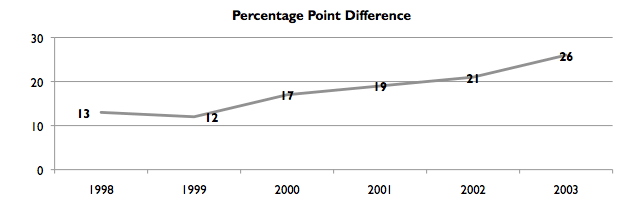
Students received Seeing Stars, Visualizing and Verbalizing, and Lindamood Phoneme Sequencing instruction to develop symbol imagery, concept imagery, and phonemic awareness. This study investigated the effect of dual coding theory using the Seeing Stars and Visualizing and Verbalizing programs. Instruction was delivered by Pueblo City Schools teachers trained in the programs. Student gains were measured with the state reading test. The results were compared to gains made by students from other, similar schools in Colorado who did not receive Lindamood-Bell instruction. Schools were comparable due to controlling for school size, free and reduced-price lunch, and minority populations. Third-grade results for Title I schools are provided below.
student results for sensory cognitive instruction


Results

The line in the chart above shows the percentage point difference (in percent proficient and advanced on the state reading test) between Pueblo (Lindamood-Bell) schools and comparison schools. By 2003, schools partnering with Lindamood-Bell were 26 percentage points above the average of the comparison schools. The independent evaluators who conducted this research determined that the main effect of Lindamood-Bell instruction was statistically significant (p < .0001). In their published article they state that “[Pueblo] Title I schools outperformed the average of the remaining comparable Title I schools in the state in an increasingly positive way during the years 1998-2003.” The results of this study support the dual coding theory model of cognition and illustrate that Lindamood-Bell instruction in the Seeing Stars, Visualizing and Verbalizing, and Lindamood Phoneme Sequencing programs lead to improved reading, which is essential to achieving success with school curricula. 

Access the full article, “Effects of a Theoretically Based Large-Scale Reading Intervention in a Multicultural Urban School District,” published in the American Educational Research Journal.


Support for Educators
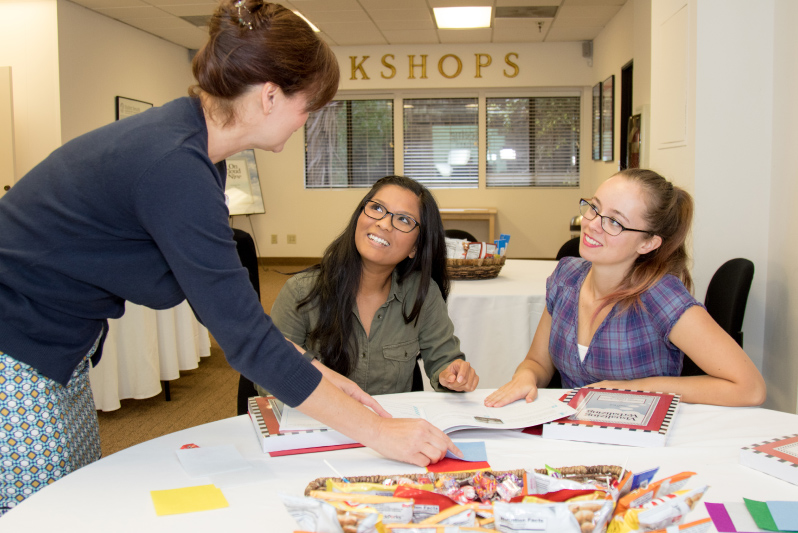
workshops in instruction using the theory of cognition

Ready to teach using a sensory-cognitive approach? Lindamood-Bell offers educators professional development in evidence-based programs designed to elevate instructional practices and improve student outcomes. Our workshops, available both in person and live online, provide in-depth training to enhance instructional practices and improve student outcomes. Schools can also partner with us for inservices, job-embedded coaching, and comprehensive school partnerships.


Help for Struggling Readers

Seeing Stars (SI)

Symbol Imagery for Phonological and Orthographic Processing in Reading and Spelling

Lindamood Phoneme Sequencing (LiPS)

Phonemic Awareness for Reading, Spelling, and Speech


Help for Poor Comprehension Skills

Visualizing and Verbalizing (VV)

Concept Imagery for Language Comprehension, Thinking, and Memory

Talkies

Foundational Development in Concept Imagery, Oral Language Comprehension, and Expression


Contact Lindamood-Bell today. Click here to schedule a brief consultation with a program expert to discuss your intervention needs. We look forward to partnering with you to boost reading, comprehension, and math for your students!

Real Simple Magazine Spotlights Lindamood-Bell Student’s Path to Success


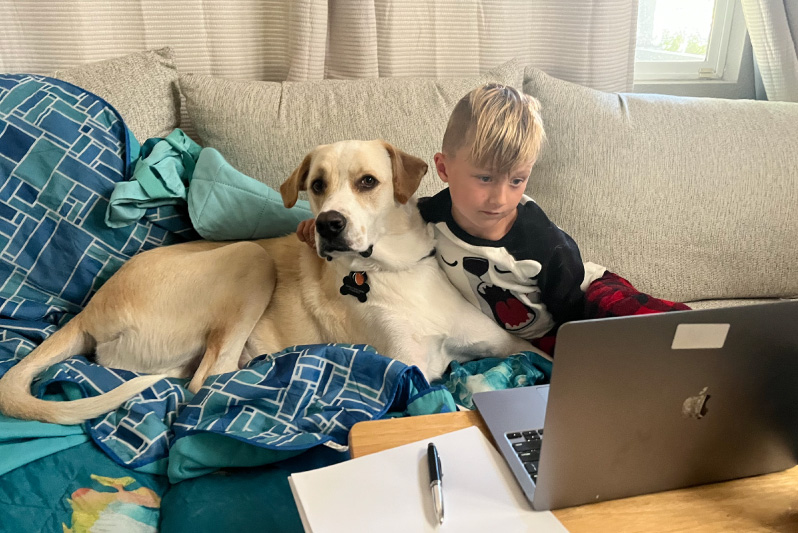
In the December 2024 issue of Real Simple, Ruth Gentry shares how adopting Sammy, a disabled rescue dog, transformed her son Roan’s life. Sammy’s resilience and Roan’s bond with him helped them navigate challenges. Roan struggled with learning and emotional issues, unable to read by age seven until he was diagnosed with dyslexia in April 2023. Ruth enrolled Roan in Lindamood-Bell online instruction, where Sammy provided steady support during his daily sessions.

Now, Roan’s confidence has grown, his behavioral issues have improved, and he reads to Sammy each night. Ruth’s story of growth and resilience is shared on TikTok and Instagram, showcasing the profound impact of Sammy’s companionship and Lindamood-Bell’s instruction.


Watch Roan read aloud from the Real Simple article about him and Sammy!


View this post on Instagram


A post shared by @sammys_chairot_of_fire


In a poignant moment from the article, Ruth shares a memory that captures the deep bond between Roan and Sammy:

Then one morning. Ruth came downstairs to find her boy and her dog on the couch. “Roan was literally asleep on top of Sammy,” she says. “I just broke down crying. I told myself, I can’t give up on him.” She took Sammy to the UC Davis veterinary hospital, where she learned he had a congenital anomaly affecting his kneecaps. A vet suggested a wheelchair and physical therapy. Sammy got his wheels and took off running, Ruth says. So did Roan, who was diagnosed with dyslexia at age 7 and started intensive tutoring with Sammy at his side. Now Roan and the Insta-famous Sammy (@sammys_chariot_of_fire) read together every night. (Excerpt from Real Simple, “The Lab Mix with Wheels & a Penchant for Story Time” December 2024)


Watch more of this family’s inspiring story!


Get in touch to learn more about online instruction with Lindamood-Bell. 


Education Personalized for Your Child:
Lindamood-Bell Academy

Enroll now and receive 25% off a month of tuition.* 


At Lindamood-Bell Academy, we tailor a live-online or in-person learning program to provide a flexible and engaging option for the 2024-25 school year.

Our personalized approach to school can be ideal for many students. Our Academy is the only school that provides reading, comprehension, and skills development at the sensory-cognitive level. With your student’s improved foundation, we apply those skills to the curriculum for maximum success.

For over thirty years, we have believed passionately that all children can learn to their full potential. Our dedicated teachers genuinely engage with their students, and as a result, our students enjoy academic growth, create social connections, and develop a love of learning. 

See how Academy can be the school that helps your child learn, thrive, and experience success in both school and life.


We’re ready to customize a program that works best for your child and family.

Call 800-300-1818 to learn more or get in touch to enroll. 


*Must enroll for the remainder of the school year through May 2025. Discount will be applied to the final month of tuition. The offer expires on December 31, 2024.

Learning Success with Small Group Instruction

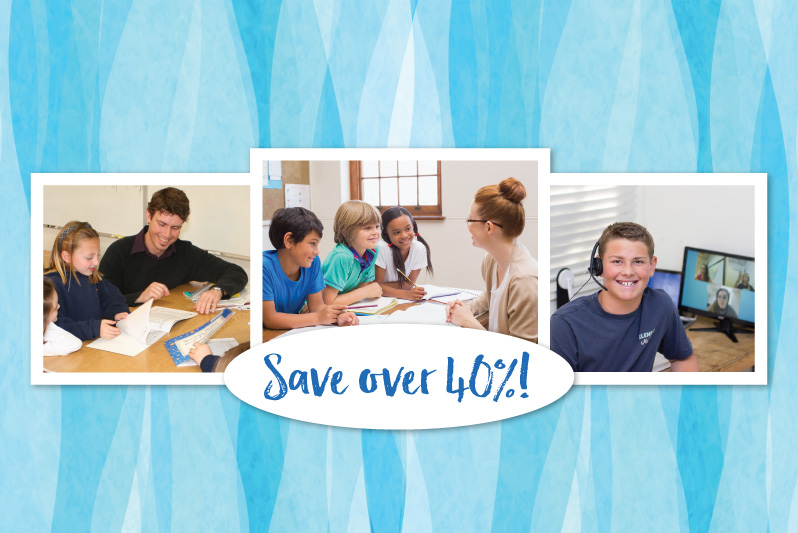
At our Learning Center, we believe every individual can learn to read and comprehend to their potential—and now, achieving learning success is more affordable than ever. With small group instruction, available exclusively during the school year, you can help your student build essential reading and comprehension skills while saving over 40% compared to one-to-one instruction.

“I love reading…well, now I do!” – A third grader after group instruction at her school

Call Us to Get Started – (800) 300-1818


Why Choose Small Group Instruction?

Group instruction is a proven, cost-effective option that provides Lindamood-Bell quality and results. Here’s why ours stands out:

  • Personalized Attention
    Small groups of just 2-3 students per instructor ensure your child receives focused, individualized support.
  • Flexible Scheduling
    Choose the schedule that works best for your family: two to four sessions per day, five days a week.
  • Evidence-Based Instruction
    Your student will be guided by trained Lindamood-Bell consultants and clinicians, using the evidence-based methods we use in our renowned one-to-one instruction.
  • Convenient Options
    Participate in-person at our Learning Center or live-online, so your child can learn from the comfort of home or on the go.
  • Significant Savings
    Enjoy the same high-quality instruction while saving over 40%—a smart choice for families seeking effective solutions at an affordable rate.


Spots Are Limited—Enroll Today!

Our small group instruction is available only during the school year, and spaces fill quickly. Don’t miss this chance to give your child the tools they need to excel.

Special Education Administrators share best practices in the Science of Reading


We’re excited to invite you to an informative pre-conference workshop at the national CASE Conference in Savannah, Georgia, on November 6.


Workshop: Scaling Up a District-Wide Literacy Intervention
Topic: Building Structures to Support Special Education Teachers in Implementing with Fidelity and Closing Gaps
Time: 9:00 – 11:30 A.M.


Jennifer Thompson, IRR Instructional Coordinator with Fulton County School District’s Services for Exceptional Children, will share insights from the district’s seven-year collaboration with Lindamood-Bell. 

Beginning in 2017, Fulton County Schools, a district of 90,000 students, began scaling up a district-wide literacy initiative to respond to the lack of consistent reading instruction by their special educators. The district selected a program focused on developing the underlying sensory-cognitive functions students need to learn to read. Over time, and through the pandemic, the district created structures in real-time in response to the needs of students, teachers, and district leadership that have resulted in identifiable changes in the performance of special education students’ reading scores, including in the district’s most struggling schools.

This presentation will outline why Fulton County determined the need to change its literacy instructional practices for special education students, what it wanted from a literacy professional development provider, who it identified as the necessary stakeholders, how it supported them in their roles, and how the implementation has continued to evolve from the initial design. Data showing Fulton County’s special education students’ positive growth in closing the reading gap with their general education peers will be shared.

Don’t miss this opportunity to hear how the district successfully scaled up this important initiative! 


Unable to attend?
If you’re interested in learning more about this initiative and its positive impact on struggling readers, please reach out to Dave Kiyvyra, Director of Development at Lindamood-Bell for Schools, at dave.kiyvyra@lindamoodbell.com or use this link to set a time to meet.