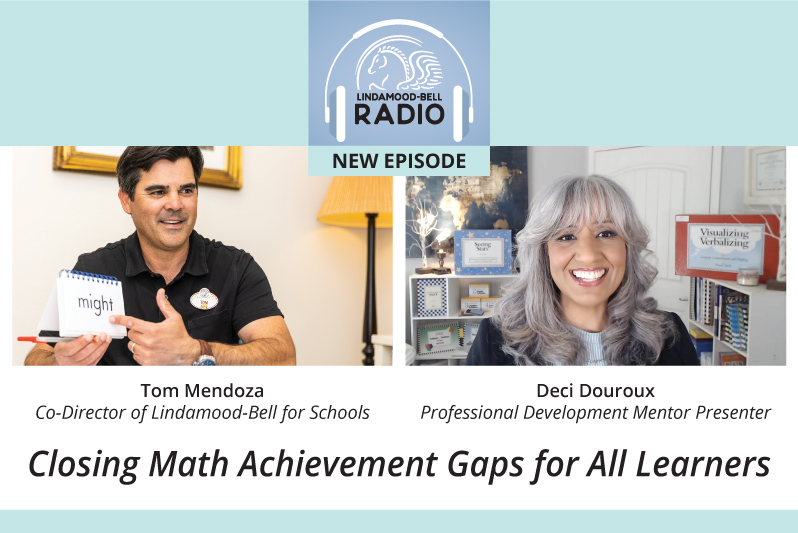
Closing Math Achievement Gaps for All Learners | Lindamood-Bell Radio
Join Tom Mendoza, Co-Director of Lindamood-Bell for Schools, and Deci Douroux, Professional Development Mentor Presenter, as they explore how developing concept and numerical imagery can help close math achievement gaps. Tom and Deci discuss a three-step instructional approach that moves students from hands-on experiences with manipulatives to imagery and language, then to computation and problem-solving—supporting…
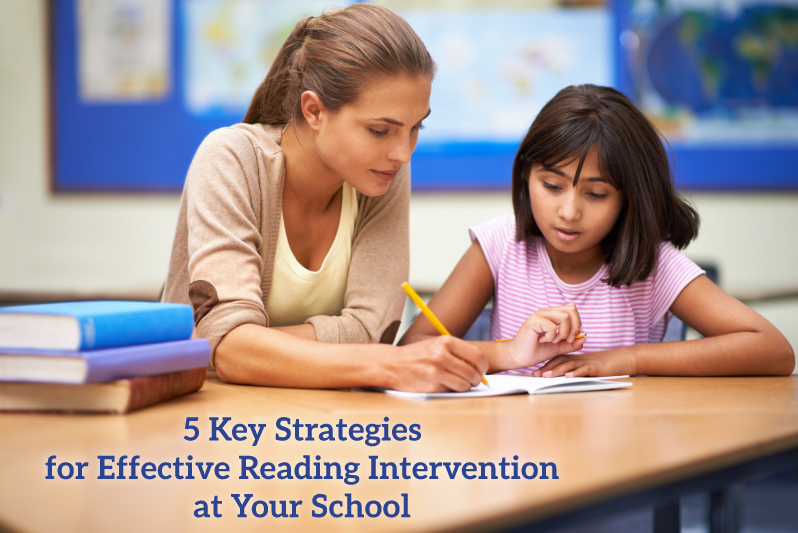
5 Key Strategies for Effective Reading Intervention at Your School
Since 1986, Lindamood-Bell has partnered with educators and school systems to boost student achievement through professional development and evidence-based reading intervention. As an industry leader, we have helped struggling readers, including students with dyslexia, make meaningful gains in reading skills. Over the years, our collaborations have revealed key lessons and effective strategies for launching successful…
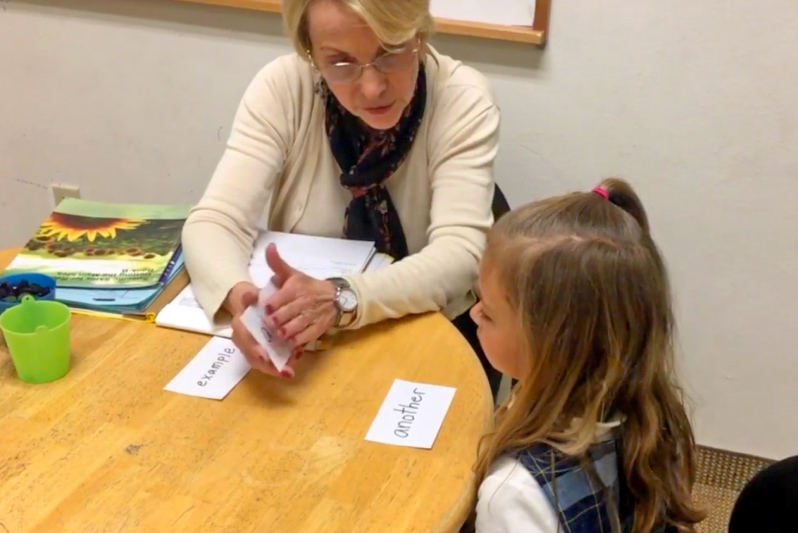
The Science of Learning | Lindamood-Bell’s Approach to the Science of Reading
The Science of Reading and Lindamood-Bell Lindamood-Bell goes beyond the Science of Reading by incorporating the Cognitive Science of Learning, embracing the brain-based codes of learning beyond written language. Our approach emphasizes sensory-cognitive skills—symbol imagery (orthographic processing) and concept imagery (mental representations)—essential for decoding, fluency, and oral and written language comprehension. Though overlooked in the…

Evidence-Based Literacy Instruction to Support the Minnesota READ Act
Lindamood-Bell Approved for Minnesota READ Act Intervention List The Minnesota Department of Education has approved Seeing Stars® and Lindamood Phoneme Sequencing® (LiPS®) as evidence-based reading interventions aligned with the Minnesota READ Act. These structured, multisensory programs accelerate foundational literacy skills and support educators in delivering high-impact instruction. Both programs address essential components of reading including…
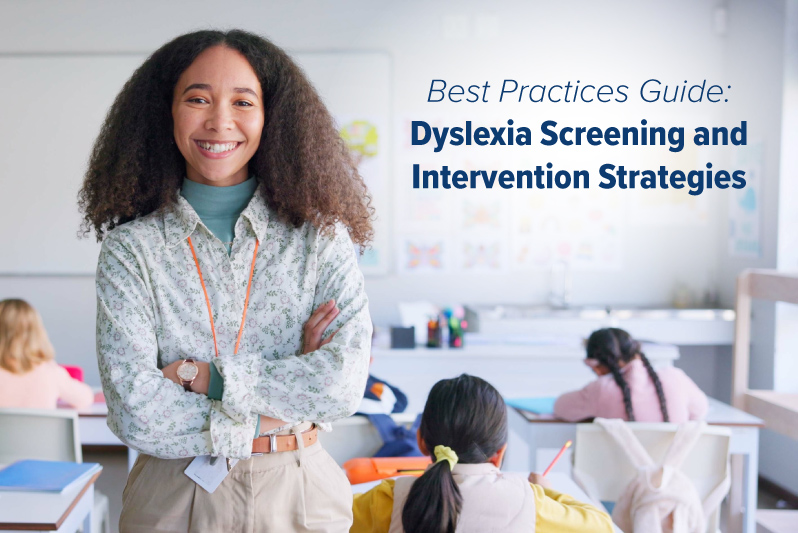
Best Practices Guide: Dyslexia Screening and Intervention Strategies
Dyslexia affects how individuals process spoken and written language, especially the ability to connect sounds to letters and read accurately and fluently. With effective screening tools and targeted, evidence-based instruction, students with dyslexia can make significant, lasting gains in reading, writing, and overall confidence. This guide explains dyslexia, clarifies how a dyslexia screener works, and…
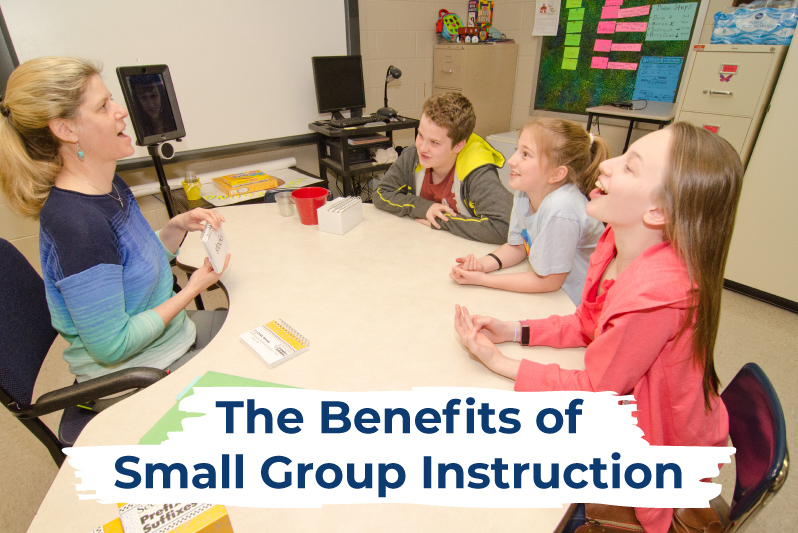
The Benefits of Small Group Instruction
What is Small-Group Instruction? In small-group instruction, a teacher works with a select number of students, typically between two and six, at a similar academic level. This setup allows the teacher to tailor the instruction to the group’s specific needs, offering individualized support and guidance. By utilizing small-group instruction, students can experience a variety of…
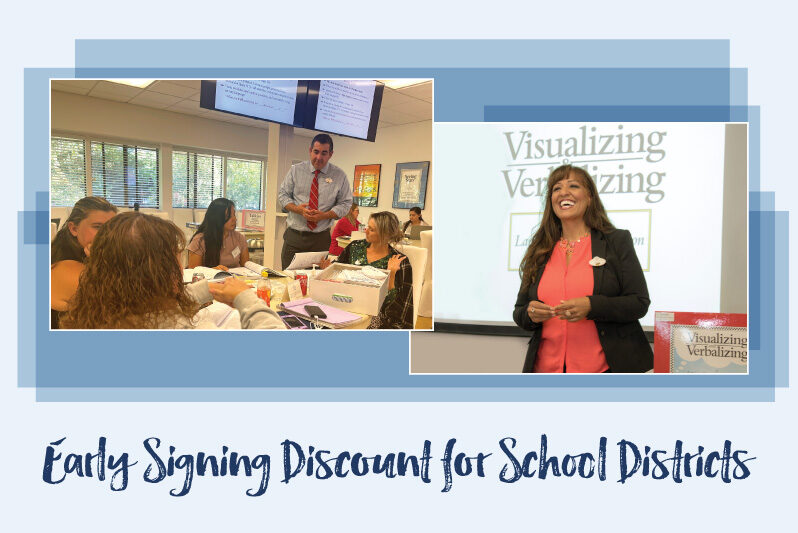
Training in Literacy Interventions from an Industry Leader
Planning professional development for your district? Lindamood-Bell makes it easy to secure high-impact training now and schedule it later—while taking advantage of early-signing savings. For a limited time, districts can save 20% per attendee when signing a contract by March 15. (minimum 10 participants) Workshops can be scheduled anytime through December 18, 2026. Professional development…
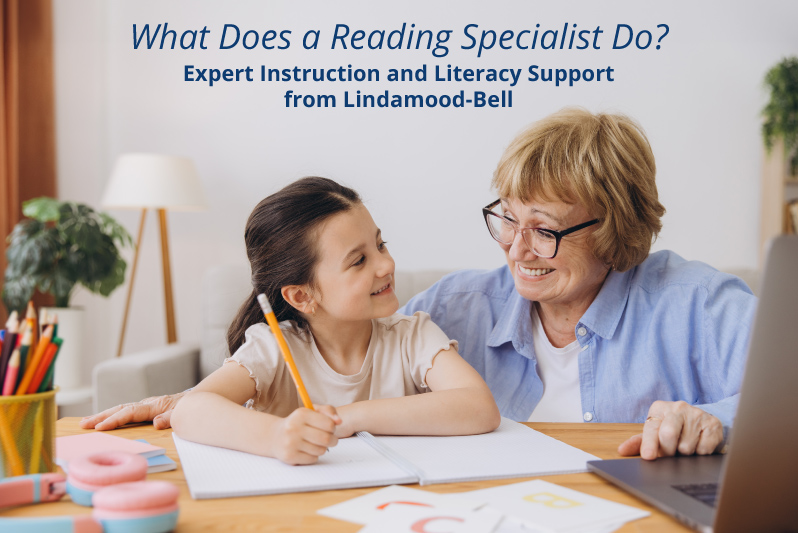
What Does a Reading Specialist Do? Expert Instruction and Literacy Support from Lindamood-Bell
What Is a Reading Specialist? When parents search for a reading specialist, they often seek expert support to help a child improve their reading accuracy, understanding, and confidence. They look for a professional who understands how children learn to read and applies this expertise when progress has slowed or challenges persist. In school settings, reading…
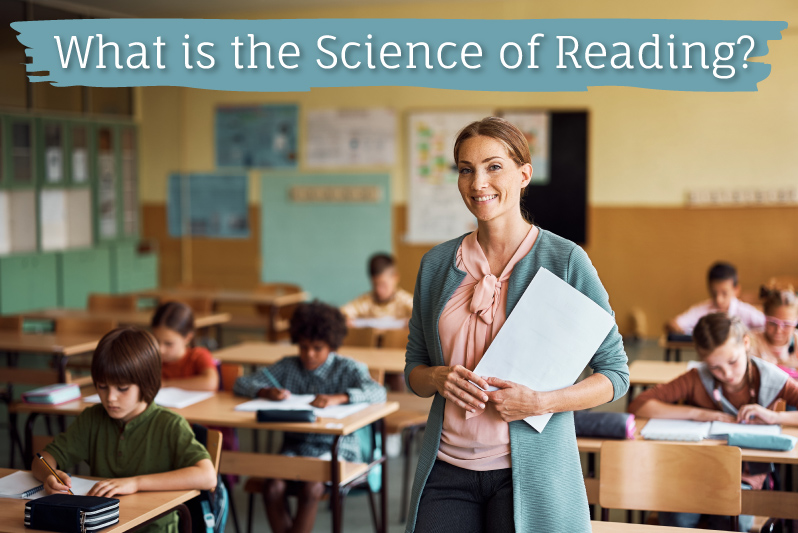
What is the Science of Reading? A Practical Guide for Educators
The science of reading is the converging body of research that explains how students learn to read, why some struggle, and which instructional practices reliably improve outcomes. When many well-designed studies across fields point in the same direction, we pay attention. This guide offers a clear, practical explanation of the science of reading and shows…
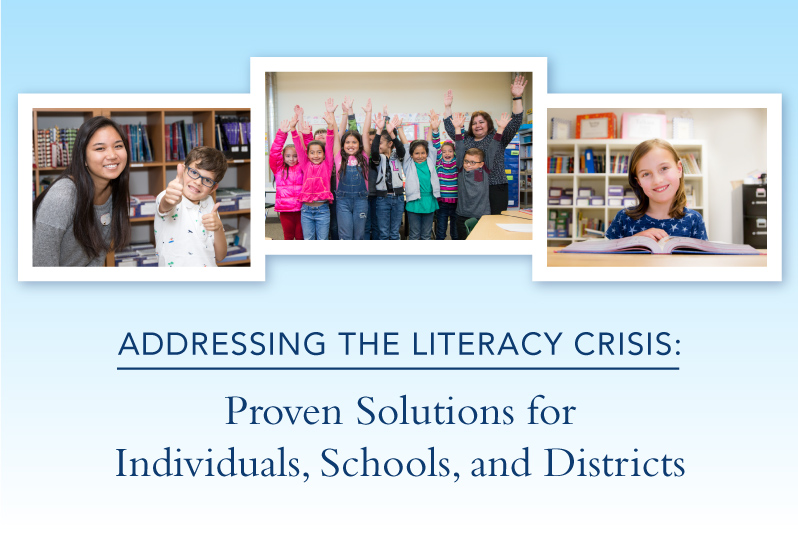
Addressing the Literacy Crisis: Proven Solutions for Individuals, Schools, and Districts
The latest National Assessment of Educational Progress (NAEP) scores confirm an alarming reality: reading proficiency among American students continues to decline. According to the National Center for Education Statistics, the average reading score for fourth graders in 2024 dropped two points from 2022 and five points from 2019, highlighting an urgent need for effective interventions….