




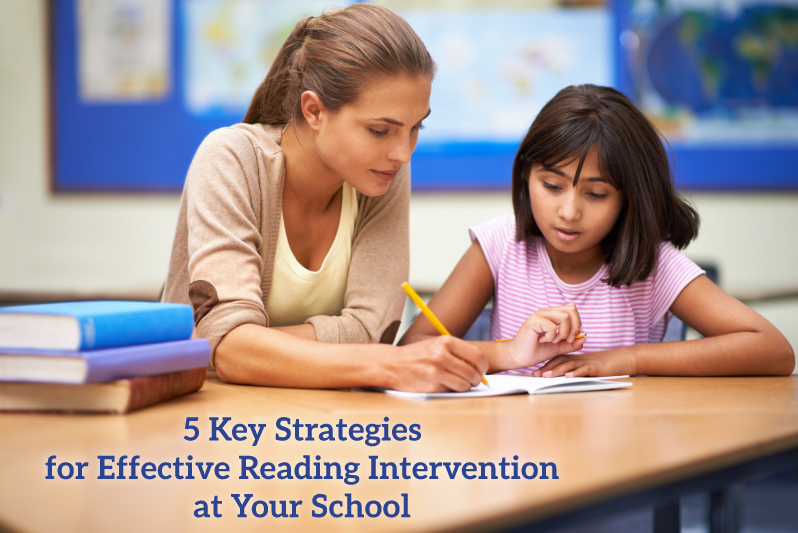
5 Key Strategies for Effective Reading Intervention at Your School
Since 1986, Lindamood-Bell has partnered with educators and school systems to boost student achievement through professional development and evidence-based reading intervention. As an industry leader, we have helped struggling readers, including students with dyslexia, make meaningful gains in reading skills.
Over the years, our collaborations have revealed key lessons and effective strategies for launching successful literacy initiatives. These partnerships have produced significant growth in reading achievement, maintained high-quality instruction with strong program fidelity, and proven scalable and sustainable over time.
Below, we share five strategies designed to help district and school leaders implement comprehensive literacy plans, including targeted interventions for struggling readers and students with dyslexia. Each strategy includes practical tips and takeaways educators can put into practice right away.
1. Use Reading Interventions Based on the Cognitive Science of Learning
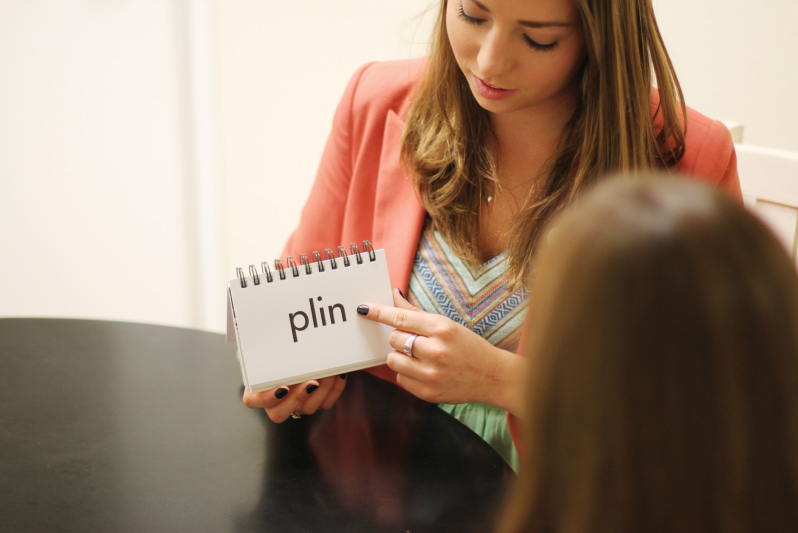
Effective reading interventions address more than just the components of reading, such as phonemic awareness, phonics, word recognition, fluency, vocabulary, and comprehension. At Lindamood-Bell, we focus on the sensory-cognitive processes that underlie reading proficiency. This imagery-language foundation integrates phonemic awareness (the ability to perceive the identity, number, and sequence of sounds within words), symbol imagery (the ability to create mental imagery for sounds and letters within words), and concept imagery (the ability to image a gestalt—whole–for oral and written language). By addressing these interconnected processes, we help students develop the fluency and comprehension needed for independent reading.
Tips and Takeaways
- Make imagery an explicit part of learning by prompting students to notice and describe what they see or hear in words and text.
- Use symbol imagery exercises to build phonemic awareness and orthographic mapping through sound and letter manipulation.
- Reinforce vocabulary by encouraging students to create detailed mental images that support understanding and recall.
- Struggling readers, students with significant literacy gaps, or those with a diagnosed learning disability such as dyslexia or CAPD may need high-dosage intervention to develop the phonemic awareness, symbol imagery, or concept imagery necessary for reading proficiency.
2. Provide Reading Intervention Training and Teacher Resources

Supporting educators is essential to successful reading intervention. Professional development helps teachers build expertise in strategies that support diverse learners. We offer live online workshops and in-service training led by experienced instructors, focusing on evidence-based approaches that educators can implement immediately.
Ongoing professional learning increases teacher confidence in tailoring instruction to individual student needs.
Tips and Takeaways
- Offer a variety of professional development options, including live workshops and on-demand training, to meet teachers’ needs and schedules.
- Encourage continuous learning with resources teachers can use independently to reinforce workshop content.
- Promote confidence and skill growth with ongoing coaching so teachers can better support students with reading challenges.
3. Differentiate Reading Interventions to Target Specific Needs

Students bring a wide range of strengths, challenges, and learning profiles to the classroom, especially when it comes to reading. Because of this diversity, one-size-fits-all reading interventions often fall short of addressing each learner’s specific needs. To better support all students, schools should assess and prioritize which reading components require the most attention for each individual, whether that’s phonemic awareness, phonics, sight word recognition, fluency, or comprehension. Daily formative assessments allow educators to track progress closely and tailor instruction to where it’s needed most.
Instead of grouping students based on scheduling convenience, grouping them by similar skill needs can make interventions more targeted and effective. For instance, students whose primary difficulty lies in comprehension benefit from specialized strategies that go beyond decoding instruction alone. Teachers can also respond to student errors with varied questioning techniques, which foster self-monitoring, deeper reflection, and greater independence as readers.
Tips and Takeaways
- Group students strategically based on their specific skill needs.
- Identify comprehension weaknesses separately from decoding skills and provide focused reading intervention.
- Use daily formative assessment and adjust instruction based on student responses.
- Employ varied questioning techniques to meet students where they are developmentally.
- Guide students in self-correcting to build independence and confidence.
4. Ensure Reading Interventions Are High-Dosage

Intensive, high-dosage reading intervention is necessary to close literacy gaps, especially for struggling readers and students with dyslexia. Instruction should be scheduled daily, with moderate needs receiving 45–60 minutes and more significant challenges receiving 90 minutes or more per session.
Repeated, focused practice in small groups or one-on-one settings helps build the cognitive pathways required for fluent, independent reading. Schools can support this by prioritizing reading intervention time, setting high expectations, and providing tutoring options during or beyond the school day.
Tips and Takeaways
- Design schedules to provide frequent, focused practice on targeted skills.
- Use small groups or individual instruction to increase intensity and accelerate progress.
- Prioritize high-dosage tutoring, including options during summer or after school.
- Train support staff to deliver consistent, effective reading intervention.
5. Develop a Shared Leadership Vision

Strong leadership at both district and school levels is foundational to the success of literacy initiatives. Engaging all stakeholders—including principals, supervisors, curriculum directors, and instructional specialists—in clear roles and expectations ensures program fidelity and continuous improvement.
Instructional leadership requires leaders to understand reading intervention content, prioritize literacy, and provide feedback that supports teacher growth. A shared vision also establishes high expectations for all students, including those with learning challenges, fostering commitment to quality instruction across the system.
Tips and Takeaways
- Develop multi-year literacy plans to allow piloting, scaling, and refining reading interventions over time.
- Build leadership capacity by involving key leaders in professional development and establishing clear criteria for monitoring instruction.
- Promote collaboration among all stakeholders to break down silos and enhance resource use.
- Encourage regular communication between general and special education staff to better serve diverse learners.
Strengthening Reading Intervention Through Professional Development

These five strategies provide an evidence-based framework for improving literacy skills among struggling readers. When implemented with fidelity and supported by strong leadership and professional development, reading interventions can be scaled sustainably to benefit all students.
At the heart of Lindamood-Bell professional development are evidence-based programs authored by our founders, including the Seeing Stars® program. Designed to develop symbol imagery, Seeing Stars addresses one of the most common challenges for struggling readers—difficulty recognizing letters and words to support accurate and fluent reading. This sensory-cognitive approach helps students improve decoding, word recognition, and fluency.
Through Lindamood-Bell Professional Development, educators learn how to implement reading interventions effectively with their students, in classrooms, small groups, or one-to-one. Lindamood-Bell offers a range of professional learning options to meet diverse school needs: live online workshops that combine research, theory, and guided practice; in-service workshops conveniently scheduled in person or live online; and job-embedded coaching, where our experienced instruction team collaborates directly with teachers to refine instruction and ensure strategies are integrated into daily teaching.
For schools and districts seeking comprehensive support, Lindamood-Bell also partners on full-school and district-level initiatives. These partnerships often begin with baseline assessments to identify student needs and set measurable goals. Throughout the partnership, Lindamood-Bell provides ongoing professional development, classroom observations, and coaching sessions to help educators maintain instructional fidelity and adapt strategies to changing student needs. Regular data reviews help leadership teams monitor student progress and make informed decisions about instruction.
By including programs authored by our founders, such as Seeing Stars, in a multi-tiered support system, schools can deliver targeted interventions for students with significant reading challenges while strengthening overall literacy instruction for all learners. The focus on sensory-cognitive processing aligns with principles from cognitive science, offering a complementary approach alongside other evidence-based reading practices.
Through these professional development opportunities— workshops, coaching, or long-term partnerships—educators gain practical tools, confidence, and expertise to help students become stronger, more independent readers. This comprehensive support builds internal capacity within schools and fosters a culture where literacy growth is sustainable and scalable. Together, we can help every student, including those with dyslexia or persistent reading difficulties, achieve their potential as readers.
To explore these ideas in greater depth, download the extended version of this article, “5 Essential Strategies for an Effective Literacy Intervention,” available as a free digital resource in our Toolkit for Educators.
To learn more about Lindamood-Bell’s impact in schools, visit Lindamood-Bell School Results. For more information or to get started, contact us or call 800-233-1819.
 ×
×