

post
BLOG AND NEWS

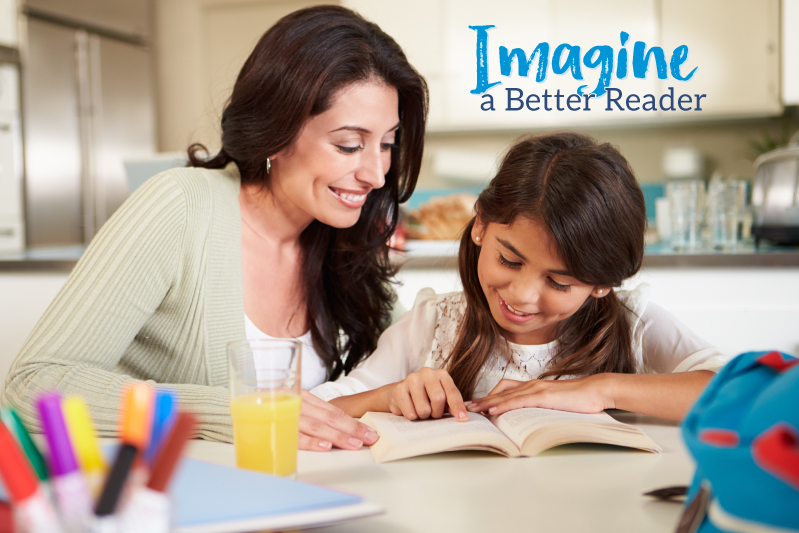
Imagine a Better Reader

Mar 28, 2017


At Lindamood-Bell, we believe that all individuals can learn how to read to their potential—including those who have a previous diagnosis of dyslexia.


Over the course of nearly three decades, Lindamood-Bell has worked with thousands of individuals. Sitting with a child or an adult who struggles to read a word provides unique insight into the learning process. Our success with students is due to our unique approach, including our research-validated, sensory-cognitive instruction.


The Challenge

Unfortunately, many students, even those who have had years of extra help, continue to struggle with grade level text. Perhaps they sound out a word eventually—but it is slow and labored. They may take so long to sound out the word that they miss the meaning of the text altogether. Or, they may substitute words when reading a paragraph. For example, they may read ‘production’ instead of ‘perfection.’


For many individuals, even those who have received extensive reading support, sight word recognition remains difficult. They may attempt to use phonics strategies for most words—such as reading  /pee/ /oh/ /plee/ for the word ‘people.’ When they finally conquer a word, they might not recognize that same word when they encounter it in the next paragraph.


Also, while a student may be able to spell words phonetically, they are unable to remember the visual patterns of words (orthography). For example, they may spell the word “friend” as “f-r-e-n-d.”


A Missing Connection

An important aspect of reading and spelling is symbol imagery, which underlies both phonological and orthographic processing. Symbol imagery is the ability to visualize letters in your mind’s eye. This connection of imagery and language is necessary for sounding out new words, as well as quickly recognizing letters and common words. Students who read fluently, and are able to self-correct their errors, have strong symbol imagery.


Traditional reading help focuses on how to sound out words as well as reading and spelling rules. While these activities have value, they do not affect the necessary imagery-language connection. They do not change how a student is processing language. This is why reading may still be extremely difficult for students who have received years of tutoring.


A Unique Approach

We help make this connection for students at our learning centers. The Seeing Stars Program develops symbol imagery for reading and spelling. Long overlooked in the field of reading research, symbol imagery is an important function that can now be assessed and developed.


Our instructors’ language stimulates an individual’s symbol imagery. For example, when a teacher says, “What letters do you see for ‘top’?” she is prompting the student to picture the letters t-o-p. By applying this skill to phonological and orthographic processing, reading, spelling, sight word and contextual fluency skills are improved.  Improved symbol imagery can change reading, regardless of a student’s age or struggle with literacy—including those with a previous diagnosis of dyslexia.


Research-validated

We continually monitor student results to ensure that we maintain our exceptional standard of quality. View our Learning Center results with students who have reading difficulties here.  


We also actively participate in neurological and behavioral research on our programs and instruction. Numerous peer-reviewed articles based on studies examining the effectiveness of our instruction with dyslexic students have been published in scholarly journals. In a recent fMRI study, neurological changes and significant reading improvements held or increased after Seeing Stars instruction. Read about this exciting research here. One of the study authors, Guinevere Eden, director of Georgetown University’s Center for the Study of Learning, was recently interviewed for the NPR series, Unlocking Dyslexia. In How Science Is Rewiring The Dyslexic Brain, Dr. Eden explains what is happening in the brain of someone with dyslexia when they read and how the brain can be “rewired” with intensive intervention. Lindamood-Bell is featured throughout the series. Get the series here.


If you would like further information or have questions regarding our instruction for please contact us 800.300.1818.


Come to our Open House!


All locations are hosting a DREAM BIG for Learning Open House in Spring of 2017. You’re Invited!


We’d love to show you how we have been creating the Magic of Learning for over 30 years! Find your Open House HERE.

Connect with us
🎉 40 Years of Changing Lives Through Learning

📖 1998: The Lindamood Phoneme Sequencing® (LiPS®) Program is published.

Lindamood-Bell co-founder and speech-language pathologist Patricia Lindamood and her daughter, Phyllis Lindamood, revised the Auditory Discrimination in Depth (ADD) program and published the Lindamood Phoneme Sequencing® Program for Reading, Spelling, and Speech (LiPS®).

The LiPS® Program helps students develop phonemic awareness by teaching them to discover and label the mouth movements that produce speech sounds. Students learn to identify and sequence sounds in words, then apply those skills to reading, spelling, and speech.

Follow along as we celebrate 40 years of changing lives through learning.

Learn more about Lindamood-Bell at the link in our bio, @lindamoodbellofficial.
“He took off when he learned to read.”

Waseem struggled with reading throughout school. Then, through Kentwood Public Schools’ partnership with Lindamood-Bell, he received Seeing Stars® instruction from a teacher trained in the program.

Today, Waseem is a fourth-year medical student.

Hear Waseem share his journey and the impact learning to read had on his life.
▶️ Watch the full video at the link in our bio, @lindamoodbellofficial.
🎉 40 Years of Changing Lives Through Learning

📚 1997: Two new programs become part of the Lindamood-Bell story.

Nanci Bell published Seeing Stars®, designed to develop symbol imagery, the ability to visualize letters and words for reading and spelling. Long overlooked in literacy instruction, symbol imagery addresses what is a missing piece for many struggling readers.

Nanci Bell and Kimberly Tuley also published On Cloud Nine® Math, designed to develop numerical imagery for number sense and mathematical reasoning.

Nearly 30 years later, both programs remain core to Lindamood-Bell instruction and our commitment to helping students learn to their potential.

Follow along as we celebrate 40 years of changing lives through learning.
Learn more about Lindamood-Bell and our instruction at the link in our bio, @lindamoodbellofficial.
October is Dyslexia Awareness Month 💙📚

For more than 40 years, Lindamood-Bell has helped students with dyslexia strengthen the skills needed for reading and learning.

Research shows what’s possible: with targeted, intensive instruction, students with dyslexia can make significant gains in reading, and studies have documented measurable changes in the brain systems that support reading.

Learn more about our approach, student outcomes, and the research behind our work. Follow the link in our bio, @lindamoodbellofficial.
🎉 40 Years of Changing Lives Through Learning

Our next milestone takes us across the globe!

🌏 1996: Our first international Seasonal Learning Center opens in Sydney, Australia.

This milestone meant more students and families could experience Lindamood-Bell instruction, helping students strengthen their reading skills and learn to their potential.

Follow along as we celebrate 40 years of changing lives through learning and the milestones that brought us here.

Learn more about Lindamood-Bell at the link in our bio, @lindamoodbellofficial.
🎉 40 Years of Changing Lives Through Learning

Our journey through 40 years of Lindamood-Bell continues with a milestone from 1993.

1993: The first Lindamood-Bell International Conference is held in Shell Beach, California.

In addition to program workshops, attendees had the opportunity to hear from professionals and scholars in the fields of learning, literacy, and cognition. Over the years, our International Conference has featured influential voices such as Allan Paivio, Jane Healy, and Temple Grandin, among many others.

Follow along as we continue celebrating 40 years of changing lives through learning and sharing the milestones that brought us here.

Learn more about Lindamood-Bell at the link in our bio, @lindamoodbellofficial.
🎉 40 Years of Changing Lives Through Learning

Our look back at 40 years of Lindamood-Bell continues with another milestone from 1992.

🏢 In 1992, Lindamood-Bell partnered with Motorola on a workplace literacy project designed to strengthen reading and comprehension skills for manufacturing associates and engineers. The project brought our approach to adult learners in a new setting and reflected something we still believe today: learning can happen at any age.

Follow along as we continue celebrating 40 years of changing lives through learning and sharing the milestones that brought us here.

To learn more about Lindamood-Bell click the link in our bio, @lindamoodbellofficial.
Attention Educators: Free Leaders in Literacy Webinar

Join Lindamood-Bell for Deeper than SoR: How One District Closed Gaps and Exited Students from Special Ed

📅 October 7, 2026 | 11 am PT / 2 pm ET / 7 pm BST

Hear how Madeira City Schools moved beyond scripted phonics instruction to build educator expertise, strengthen intervention, and improve outcomes for struggling readers and students receiving special education services.

Register now and bring practical insights back to your classroom, school, or district - Follow the link in our bio, @lindamoodbellofficial.
🎉 40 Years of Changing Lives Through Learning

Our next milestone takes us to 1992!

📍 1992: First Learning Center outside of San Luis Obispo opens in Sacramento, California

Six years after Lindamood-Bell was founded, we expanded beyond our San Luis Obispo roots with the opening of a Learning Center in Sacramento.

It was an important step in our growth, bringing Lindamood-Bell’s one-to-one, individualized instruction to more students and families.

Follow @lindamoodbellofficial as we celebrate 40 years of changing lives through learning and revisit the milestones that shaped our story. ❤️

Learn more at the link in our bio.
🎥 Now Available On-Demand: Online Instruction That Actually Works

When you think of online learning, you might picture large virtual classrooms where it can be difficult for students to stay engaged. Lindamood-Bell online instruction is a different experience: live, one-to-one instruction with individualized support and active student engagement.

See what an online session actually looks like and learn about the research and results behind our reading instruction.

👉 Watch the recording at the link in our bio, @lindamoodbellofficial.
🎉 40 Years of Changing Lives Through Learning
As we continue looking back at the milestones that have shaped Lindamood-Bell, we’re returning to where it all began.

📖 1986: Nanci Bell publishes Visualizing and Verbalizing®

The same year Lindamood-Bell Learning Processes was founded, co-founder Nanci Bell published Visualizing and Verbalizing for Language Comprehension and Thinking®, introducing an approach designed to develop concept imagery, the ability to create an imaged gestalt from language.

The program grew from Nanci’s work with students who could read words but struggled to understand, remember, and think critically about what they read.
Today, Visualizing and Verbalizing® remains central to our approach to developing language comprehension and higher-order thinking skills.

Follow @lindamoodbellofficial as we celebrate 40 years of changing lives through learning. ❤️
Learn more at the link in our bio.
🎧 New Podcast Episode!

Lindamood-Bell for Schools Director of Development Dave Kiyvyra speaks with Winifred Winston and LeDerick Horne from the Black and Dyslexic podcast about the dyslexia identification and support gap.

They explore disparities in dyslexia identification, limited access to effective reading instruction in many communities, and the challenges families face in understanding and securing the support their children need.

Listen and subscribe at the link in our bio, @lindamoodbellofficial.
📚 When should kids start reading?

Our latest blog article explores typical reading milestones, signs of readiness, the foundational skills that support reading and comprehension, and when additional support may be helpful.

👉 Read “When Should Kids Start Reading? Age Guidelines, Readiness Signs, and How to Help.” Follow the link in our bio, @lindamoodbellofficial.
Request Information

Request Information

When you complete our form, we'll send you to our digital information packet and reach out to you shortly.
You may also call us at

Schedule a Learning
Ability Evaluation

Please fill out the form and we will be in touch to schedule an evaluation.