


What Is Phoneme Awareness? A Guide for Parents and Educators
Phoneme awareness is an important component of reading and language development, but it is not reading itself. To understand phoneme awareness, it is helpful to first understand how reading works.
Reading is an integration of multiple processing skills, including word attack, sight word recognition, contextual reading fluency, oral vocabulary, and comprehension. Successful reading requires more than decoding words accurately. Readers must also create meaning from language, monitor their own understanding, and self-correct when something does not make sense.
At Lindamood-Bell, we view reading and comprehension as cognitive acts that depend on underlying sensory-cognitive functions. Three sensory-cognitive functions underlie reading and comprehension:
Phoneme Awareness (PA) is the ability to perceive the identity, number, and sequence of sounds within words.
Symbol Imagery (SI) is the ability to create mental images for sounds and letters within words.
Concept Imagery (CI) is the ability to create an imaged gestalt, or whole, for oral and written language.
While individuals may differ in their abilities, the processes necessary for reading are not different. When one or more of these sensory-cognitive functions is weak or inefficient, reading and comprehension can become difficult. The encouraging news is that sensory-cognitive functions can be developed, changing an individual’s ability to read, comprehend, and learn.
Reading is a cognitive process consisting of language and imagery. Readers use sensory input to monitor accuracy, self-correct errors, and construct meaning from text. Effective instruction must therefore align with how cognition works if it is to produce meaningful and lasting changes in reading and comprehension.
What Is Phoneme Awareness?

Phoneme awareness is the ability to perceive the identity, number, and sequence of sounds within words.
For example, a student with strong phoneme awareness can recognize that the word cat contains three sounds: /k/, /a/, and /t/. The student can identify individual sounds, blend sounds together to form words, segment words into sounds, and manipulate sounds to create new words.
Phoneme awareness involves attending to spoken language and recognizing the sound structure of words. It is often discussed as part of phonological awareness, a broader term that includes awareness of larger units of sound such as words, syllables, and rhymes.
Why Phoneme Awareness Matters

Phoneme awareness contributes to accurate word identification, spelling, and language processing by enabling individuals to perceive the identity, number, and sequence of sounds within words.
When phoneme awareness is well developed, students are better able to notice when sounds are added, omitted, substituted, or rearranged within words. This ability helps them monitor their own responses, recognize errors, and make corrections while reading and spelling.
Weak phoneme awareness can contribute to difficulties with:
- Recognizing the sameness and difference of sounds
- Discriminating the identity, number, and sequence of sounds within words
- Blending sounds into words
- Word attack
- Spelling
- Self-correcting reading errors
Research and instructional experience have demonstrated that phoneme awareness can be developed and applied to literacy skills. As students strengthen their awareness of sounds within words, they often become more accurate and confident readers and spellers.
At the same time, phoneme awareness alone does not fully explain skilled reading. Students may develop strong phoneme awareness and word attack skills yet continue to struggle with automatic word recognition, contextual reading fluency, or comprehension. For this reason, Lindamood-Bell views phoneme awareness as one of several sensory-cognitive functions that contribute to successful reading and learning.
Developing the Sensory-Cognitive Functions for Reading

Lindamood-Bell uses programs that develop the sensory-cognitive functions that underlie reading and comprehension.
Seeing Stars® Program, Symbol Imagery for Phonological and Orthographic Processing in Reading and Spelling (SI)
The Seeing Stars® Program, by Nanci Bell, develops symbol imagery, the ability to visualize sounds and letters in words, as a basis for orthographic awareness, phoneme awareness, word attack, word recognition, spelling, and contextual reading fluency.
As students develop the ability to image letters and letter patterns, they strengthen their awareness of the sounds within words and improve their ability to identify, decode, spell, and recognize words automatically.
Lindamood Phoneme Sequencing® Program for Reading, Spelling, and Speech (LiPS®)
Some students require more basic and more extensive work to develop phoneme awareness.
The LiPS® Program, by Patricia Lindamood and Phyllis Lindamood, teaches students to discover and label the oral-motor movements of phonemes. Using oral-motor, visual, and auditory feedback, students learn to verify the identity, number, and sequence of sounds within words. LiPS® may be appropriate for students who need more direct and extensive phoneme awareness instruction.
Visualizing and Verbalizing® for Language Comprehension and Thinking (V/V®)
The V/V® Program, by Nanci Bell, develops concept imagery, the ability to create an imagined or imaged gestalt from language, as a basis for comprehension and higher-order thinking. The development of concept imagery supports reading and listening comprehension, memory, oral vocabulary, critical thinking, and writing.
Signs a Student May Need Support

Students with weaknesses in phoneme awareness may:
- Have difficulty perceiving or manipulating sounds within words
- Add, omit, substitute, or reverse sounds when reading or spelling
- Struggle with word attack and spelling
- Rely on guessing rather than accurate word identification
Reading difficulties may also result from weaknesses in symbol imagery or concept imagery. Students who struggle with word attack, spelling, or contextual reading fluency may benefit from developing symbol imagery. Students who struggle with vocabulary, language comprehension, or creating meaning from text may benefit from the development of concept imagery.
When a student struggles with reading, it is important to look beyond academic performance and consider the sensory-cognitive processes that underlie learning. A Learning Ability Evaluation can help identify strengths and weaknesses and provide valuable information for developing an effective instructional plan.
Lindamood-Bell Instruction
Traditional reading and tutoring programs often focus on practice, content, reading strategies, or spelling rules. While these approaches may address academic performance, they do not always develop the sensory-cognitive functions necessary for reading and comprehension.
Lindamood-Bell is different.
Our instruction is designed to develop the sensory-cognitive processes that underlie reading, spelling, language comprehension, and critical thinking. Depending on an individual’s learning needs, instruction may focus on developing one or more of the sensory-cognitive functions that support learning.
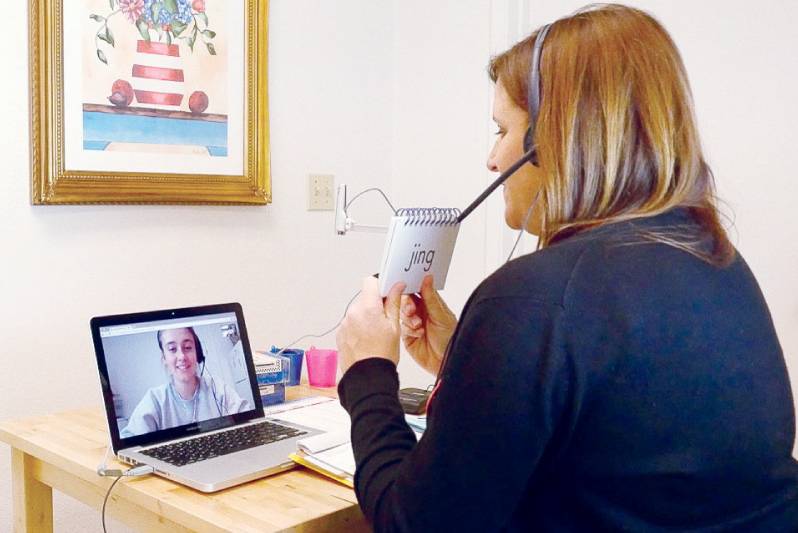
Instruction is personalized, intensive, and responsive to student performance. Through one-to-one or small-group instruction, delivered in person or live-online, students develop the underlying processes necessary for reading, spelling, comprehension, and learning.
Lindamood-Bell Instruction begins with a Learning Ability Evaluation that identifies strengths and areas of need. Using this information, we create an individualized learning plan designed to develop the sensory-cognitive functions that support learning and academic success.
Across thousands of students, Lindamood-Bell has documented gains in reading, spelling, language comprehension, and critical thinking. Our goal is to help students become accurate, fluent, and confident learners.
Training for Educators
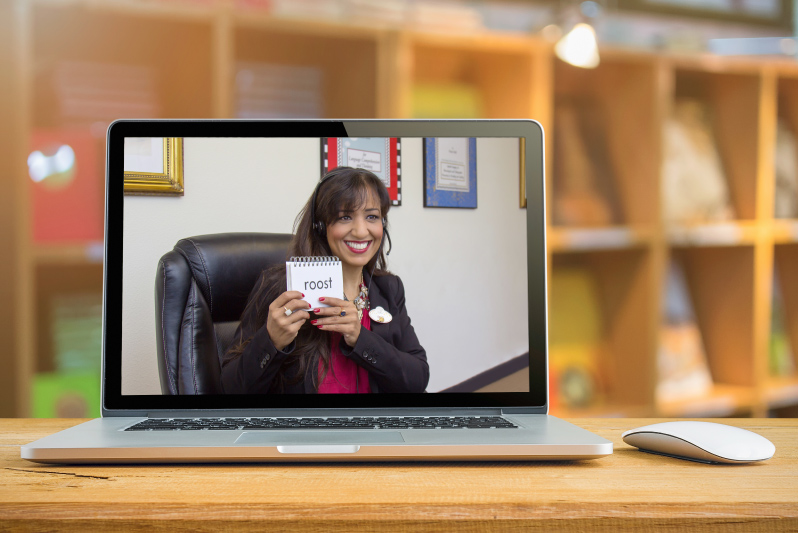
Lindamood-Bell partners with schools and districts to help educators understand and develop the sensory-cognitive processes that underlie reading, comprehension, and learning. Our approach, grounded in the cognitive science of learning, aligns with the science of reading and structured literacy.
Through professional learning, educators learn how sensory-cognitive functions such as Phoneme Awareness, Symbol Imagery, and Concept Imagery contribute to reading, spelling, language comprehension, and academic success.
Lindamood-Bell for Schools offers workshops, coaching, and comprehensive school partnerships, available live online and in person. Individual educators can enroll in workshops to deepen their instructional knowledge, while schools and districts can engage in coaching and partnership opportunities designed to support implementation and student achievement.
Teachers, specialists, interventionists, administrators, and school teams gain practical strategies they can apply immediately while deepening their understanding of the processes that support literacy and learning.
Frequently Asked Questions
What is the difference between phoneme awareness and phonics?
Phoneme awareness is the ability to perceive and manipulate the sounds within spoken words. Phonics involves instruction in the relationship between sounds and letters.
How can I tell if a child needs help with phoneme awareness?
Students with weak phoneme awareness may have difficulty identifying sounds within words, blending sounds, spelling accurately, or discriminating between similar sounds.
Does phoneme awareness affect reading comprehension?
Phoneme awareness supports accurate word identification and spelling. However, skilled reading also depends on symbol imagery and concept imagery. Students may develop strong phoneme awareness yet continue to struggle with automatic word recognition, contextual reading fluency, or comprehension. Independent reading and comprehension require the integration of multiple sensory-cognitive functions.
How does Lindamood-Bell help with reading?
Depending on an individual’s learning needs, instruction may focus on developing one or more of the sensory-cognitive functions that underlie reading and comprehension:
- Seeing Stars® develops Symbol Imagery, the ability to visualize sounds and letters within words.
- Visualizing and Verbalizing® develops Concept Imagery, the ability to create a gestalt for oral and written language.
- LiPS® provides more basic and extensive development of phoneme awareness for students who may benefit from oral-motor kinesthetic feedback.
One or more of these programs may be used to address an individual’s specific learning needs.
 ×
×