


Unlocking Student Potential with a Science of Reading-Aligned Curriculum
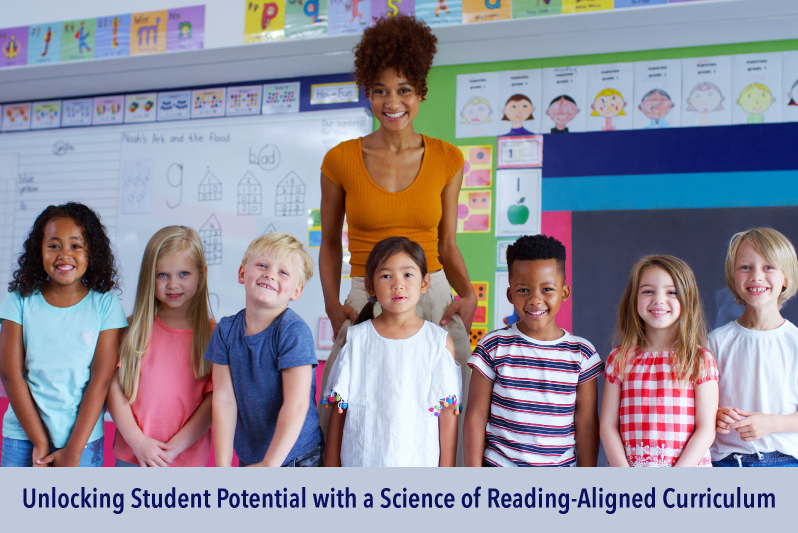
In today’s educational environment, the Science of Reading is a critical framework for understanding how students learn to read. This evidence-based approach draws on decades of interdisciplinary research to inform the most effective literacy instruction. At Lindamood-Bell, we align with the principles of the Science of Reading and expand upon them, offering programs rooted in the Cognitive Science of Learning. Our goal is to unlock each student’s potential through targeted instruction that addresses the sensory-cognitive foundations of reading and comprehension. Join us as we explore the key elements of a Science of Reading-aligned curriculum, how we implement these principles, and the transformative outcomes we see in schools every day.
Decoding the Science of Reading Approach

The Science of Reading integrates research from fields such as cognitive psychology, linguistics, neuroscience, and education. A Science of Reading-aligned curriculum emphasizes explicit, systematic instruction in foundational reading skills, particularly phonemic awareness, phonics, orthographic mapping, fluency, vocabulary, and comprehension. These components are essential for building proficient, confident readers. What sets the Science of Reading apart from traditional reading methods is its focus on approaches with an extensive evidence base.
At Lindamood-Bell, our approach is grounded in the components identified in the Science of Reading. Additionally, our approach embodies the sensory processes of reading and comprehension, sometimes referred to as the Cognitive Science of Learning. The process of reading is explained by brain-based codes of learning, including both written and oral language. Our approach emphasizes sensory-cognitive skills—symbol imagery (the ability to create mental pictures of letters and words) and concept imagery (the ability to create mental pictures from language)—essential for decoding, fluency, and oral and written language comprehension. Often overlooked or minimized in current approaches based on the Science of Reading, sensory-cognitive skills are crucial for developing lifelong learners.
Since 1986, Lindamood-Bell has led evidence-based instruction for early literacy, struggling readers, and students with learning challenges such as dyslexia, dyscalculia, and memory and language comprehension deficits, including autism. While our methods align with the Science of Reading, our distinct emphasis on sensory-cognitive skills offers a stronger foundation for lasting gains in fluency and comprehension.
Essential Elements of a Science of Reading Aligned Curriculum

An effective Science of Reading-aligned curriculum includes instruction in decoding and comprehension skills. Beginning decoding instruction involves alphabetic principles and letter-sound knowledge, phonological awareness, orthographic processing, and phonics. Phonemic awareness enables students to identify and manipulate individual sounds, while phonics teaches the relationships between sounds and written symbols and how words are decoded. The Seeing Stars® program directly targets these foundational skills by developing symbol imagery as a sensory-cognitive skill (mental representation) for both phonological and orthographic processing involved in word decoding.
For some students, additional multisensory development for decoding skills is gained through the Lindamood Phoneme Sequencing® (LiPS®) Program. This approach involves oral motor feedback as students articulate the sounds of words, integrating auditory, visual, and kinesthetic skills. This feedback system, along with symbol imagery, enables students to perceive the identity, number, and order of phonemes in syllables.
Vocabulary development and comprehension skills are also central to reading success. Traditional approaches based on the Science of Reading emphasize background knowledge, language exposure, and comprehension strategies, such as identifying the main idea or comprehension monitoring. By contrast, Lindamood-Bell explicitly develops the sensory-cognitive skill required for word knowledge and comprehension in the Visualizing and Verbalizing® (V/V®) program. The program develops concept imagery, which is the ability to form mental representations from language. This skill is critical for oral and written language comprehension, inferencing, and critical thinking.
Reading fluency requires automaticity in decoding and comprehension. By developing fluency through sensory-cognitive instruction, students gain speed, accuracy, and confidence.
To be effective, a Science of Reading-aligned curriculum integrates these essential elements—phonemic awareness, phonics, orthographic mapping, fluency, vocabulary, and comprehension—within a cohesive framework. In addition, by approaching these components through a sensory-cognitive lens, our curriculum not only aligns with Science of Reading principles but also deepens student understanding, ensuring lasting literacy success.
Effective Implementation of a Science of Reading Curriculum

Implementing a Science of Reading curriculum requires more than just adopting new materials. It demands a systemic shift in instructional practice, professional development, and school culture. Lindamood-Bell partners with schools and districts to support this transformation with comprehensive implementation strategies.
Implementing a Science of Reading curriculum begins with assessing current practices and identifying student needs. We provide diagnostic assessments that reveal students’ strengths and weaknesses in sensory-cognitive processes. Based on these insights, we customize instruction using our founders’ research-validated programs.
Professional development is at the heart of successful implementation. Lindamood-Bell offers workshops and coaching to train educators in delivering our founders’ evidence-based programs with fidelity. Our teacher workshops not only cover the “what” and “how” of reading instruction, but also the “why,” connecting pedagogy to neuroscience and cognitive theory.
Our approach is flexible and inclusive. We help educators differentiate instruction to meet the needs of diverse learners, including students with dyslexia, autism, and other learning challenges. By integrating sensory-cognitive strategies such as concept imagery, we empower all students to access the curriculum and make meaningful progress.
Transformative Impact of a Science of Reading Curriculum

Lindamood-Bell’s commitment to the Science of Reading and the Cognitive Science of Learning has resulted in transformative outcomes for students across the educational spectrum. Schools using our founders’ programs report dramatic improvements in reading fluency, comprehension, and overall academic confidence. Our success in schools underscores how instruction based on the Cognitive Science of Learning addresses diverse learning needs, ensuring every child has the opportunity to thrive.
Our research and results with schools include numerous case studies and peer-reviewed articles demonstrating the effectiveness of our approach. We also witness the daily impact in classrooms and learning centers, where students who once dreaded reading can now tackle challenging texts with enthusiasm and pride.
The benefits extend beyond test scores. Students develop a love of reading and the confidence to pursue learning independently. Teachers gain new insights into how learning happens and how to support every child in reaching their full potential.
Lindamood-Bell: Science of Reading Curriculum Excellence
At Lindamood-Bell, we champion the principles of the Science of Reading while expanding the conversation to include critical cognitive processes that make reading possible. Our Science of Reading-aligned curriculum is informed by decades of cognitive science research and clinical application.
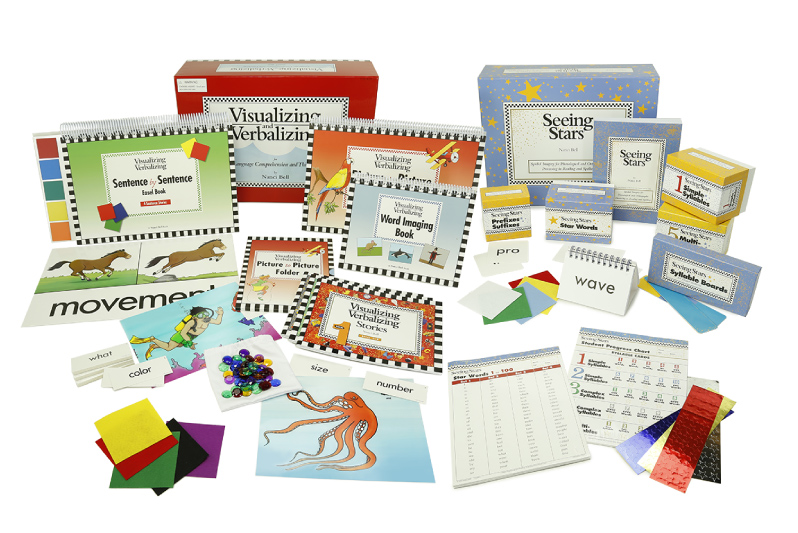
Our unique focus on imagery-based instruction sets apart our Science of Reading-aligned curriculum. Our founders have developed unique programs focusing on critical reading development components:
Seeing Stars (SI) develops symbol imagery—the ability to visualize sounds and letters in words—as a basis for orthographic awareness, phonemic awareness, word attack, word recognition, spelling, and contextual reading fluency.
Visualizing and Verbalizing (V/V) develops concept imagery—the ability to create an imagined or imaged gestalt from language—as a basis for comprehension and higher-order thinking. The development of concept imagery improves reading and listening comprehension, memory, oral vocabulary, critical thinking, and writing.
Lindamood-Bell Phoneme Sequencing (LiPS) teaches students to discover and label the oral-motor movements of phonemes. Students can then verify the identity, number, and sequence of sounds in words. Once established, phonemic awareness is then applied to reading, spelling, and speech.
We invite educators and school administrators to explore how Lindamood-Bell’s Science of Reading-aligned curriculum can transform classroom literacy outcomes. Our instruction experts are ready to assist in implementing these research-backed programs tailored to students’ needs. Contact us today to discuss collaboration opportunities to set students on a path to lifelong learning.
Call 800-233-1819 or email pd.solutions@lindamoodbell.com to learn more and get started.
 ×
×