


Best Practices Guide: Dyslexia Screening and Intervention Strategies
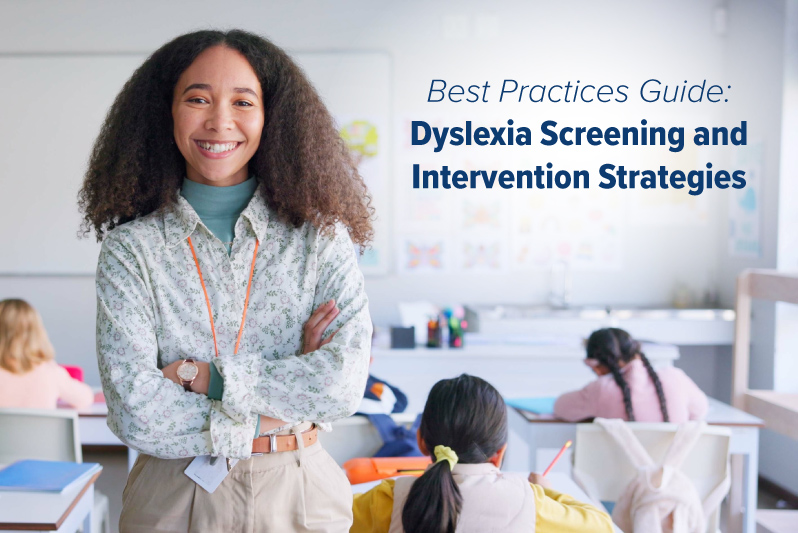
Dyslexia affects how individuals process spoken and written language, especially the ability to connect sounds to letters and read accurately and fluently. With effective screening tools and targeted, evidence-based instruction, students with dyslexia can make significant, lasting gains in reading, writing, and overall confidence. This guide explains dyslexia, clarifies how a dyslexia screener works, and outlines intervention strategies with the strongest research base. It also provides actionable steps for implementing schoolwide screening and highlights resources, including professional development from Lindamood-Bell, that support educators, families, and students. When schools pair a universal literacy screener with clear intervention strategies, they create a strong foundation for early identification and timely support.
Recent research is shedding new light on how effective intervention can change not only reading outcomes, but also the brain itself.
New Research Validates Brain-Based Impact of Intervention

A 2026 Stanford-led study published in Nature Communications provides compelling neurobiological evidence for intensive reading intervention. Using functional MRI, researchers found that students with dyslexia who participated in an intensive reading intervention program implemented by Lindamood-Bell experts using Nanci Bell’s Seeing Stars® program made significant reading gains, nearly one grade level in just eight weeks, and showed measurable growth in the brain’s Visual Word Form Area, a region critical for fluent word recognition. These findings reinforce what decades of practice have shown: targeted, evidence-based instruction can strengthen both reading skills and the neural systems that support them.
Read more about the Stanford study
The Evolving Definition of Dyslexia

The International Dyslexia Association’s updated definition of dyslexia reflects a growing recognition that dyslexia involves more than phonological processing alone. While phonological difficulties remain central, the new definition also references research pointing to additional language-based challenges, including aspects of orthographic processing.
At Lindamood-Bell, we agree that dyslexia is multifaceted, but our clinical and research experience shows that orthographic processing is not simply an associated feature. The ability to create, store, and retrieve precise mental images for letters and letter sequences, known as symbol imagery, is foundational to accurate reading, spelling, and comprehension. When this underlying skill is weak, students may struggle even after receiving phonological instruction.
Understanding Dyslexia: A Comprehensive Overview

Dyslexia is a neurobiological learning difference that primarily affects accurate and/or fluent word recognition, spelling, and decoding. It exists on a continuum. Some learners experience mild challenges, while others face more significant difficulties. Dyslexia is not related to intelligence, motivation, or effort. With appropriate instruction, students with dyslexia can become skilled readers and writers.
Prevalence estimates suggest that dyslexia affects approximately 5–10% of the population, with higher figures when broader reading difficulties are included. Dyslexia occurs across languages and cultures and frequently runs in families, indicating a genetic component.
Common myths persist. Dyslexia is not simply “seeing letters backwards,” and it is not caused by vision problems. It reflects how the brain processes language sounds and maps them to written symbols. Another misconception is that students will outgrow dyslexia or cannot become strong readers. In reality, structured, explicit, and systematic instruction, delivered with sufficient intensity, can drive substantial improvement for most learners.
Early identification matters. When schools identify risk in kindergarten or first grade and provide targeted instruction, students are more likely to develop foundational skills and avoid downstream academic struggles. A dyslexia screener can identify risk factors early, enabling proactive intervention and better long-term outcomes. Many districts pair a dyslexia screener with a literacy screener to capture both foundational skill risk and broader reading performance, which strengthens decision-making about intervention strategies.
The Role of Dyslexia Screeners in Education

A dyslexia screener is a brief, reliable set of tasks designed to identify students at risk for reading difficulties associated with dyslexia. A screener does not diagnose dyslexia. Instead, it flags students who may need targeted support or a comprehensive evaluation. Schools often administer universal screeners to all students at key points during the year to ensure equitable access to early support.
Effective screening reflects the core components of language and reading associated with risk. A high-quality dyslexia screener typically measures:
- Phonological awareness: the ability to hear, identify, and manipulate sounds in words, such as blending and segmenting phonemes
- Letter-sound knowledge: recognition of letters and the sounds they represent
- Rapid automatized naming (RAN): speed of naming letters, digits, colors, or objects
- Decoding and word reading: reading real words and pseudowords to assess sound-symbol mapping and pattern generalization
- Spelling and encoding: applying sound-letter knowledge to write words accurately
- Oral language measures: vocabulary and listening comprehension, when appropriate, to inform instruction
Early screening empowers students and educators by providing actionable data. For students, it means timely support that can prevent frustration, reduce academic gaps, and build confidence. For educators and schools, screening data helps target instruction, allocate resources, and evaluate the impact of interventions. Universal, schoolwide screening promotes equity by ensuring identification does not depend solely on teacher referral or parent advocacy. When teams interpret both literacy screener and dyslexia screener results together, they are better able to select intervention strategies that meet learners where they are.
Effective Dyslexia Intervention Strategies for Students

For Lindamood-Bell, effective dyslexia intervention begins with using screening data to inform instruction. We help schools and educators interpret dyslexia screener and literacy screener results and translate those findings into targeted, explicit instruction that develops the sensory-cognitive skills essential for reading and spelling. Our approach is systematic, cumulative, and responsive to student data, with a clear emphasis on strengthening how students process and integrate language.
Rather than relying solely on screening results, we connect identified risk patterns to instructional decisions. Screening data guides where instruction begins, which skills require the greatest emphasis, and how instruction is adjusted over time. From there, instruction is designed to address the underlying sensory-cognitive weaknesses that directly limit reading progress.
Instruction focuses on explicit, systematic teaching that connects sounds, letters, and spelling patterns while strengthening symbol imagery—the ability to form, store, and retrieve precise mental images for letters and letter sequences. This sensory-cognitive foundation is the basis for accurate decoding, word recognition, and the development of reliable sight words. Guided practice and reading experiences then build fluency and comprehension once accuracy and sound-symbol relationships are secure.
The instructional principles that support students with dyslexia are the same principles that support all developing readers. When explicit, systematic, evidence-based instruction that develops sensory-cognitive skills is delivered in the early grades, particularly kindergarten through second grade, schools can prevent or significantly reduce the severity of later reading difficulties, including dyslexia. Lindamood-Bell programs support strong classroom instruction as well as targeted intervention, allowing schools to address risk proactively, even before additional diagnostic data is available.
Within a tiered framework such as MTSS or RTI, Lindamood-Bell supports a scalable, schoolwide approach to reading instruction. High-quality core instruction lays a foundation for all students, while dyslexia screener data and ongoing progress monitoring guide targeted, intensive intervention. This ensures instructional time, grouping, and intensity are matched to student needs and adjusted as students respond to instruction.
Consistency, sufficient intensity, and high expectations are essential for meaningful gains. When schools align screening, instruction, and intervention using Lindamood-Bell programs, they create a cohesive system that connects assessment data to daily teaching practices. This alignment supports early identification, targeted intervention, and long-term reading success for students with dyslexia and those at risk.
Teacher Training for Dyslexia Intervention
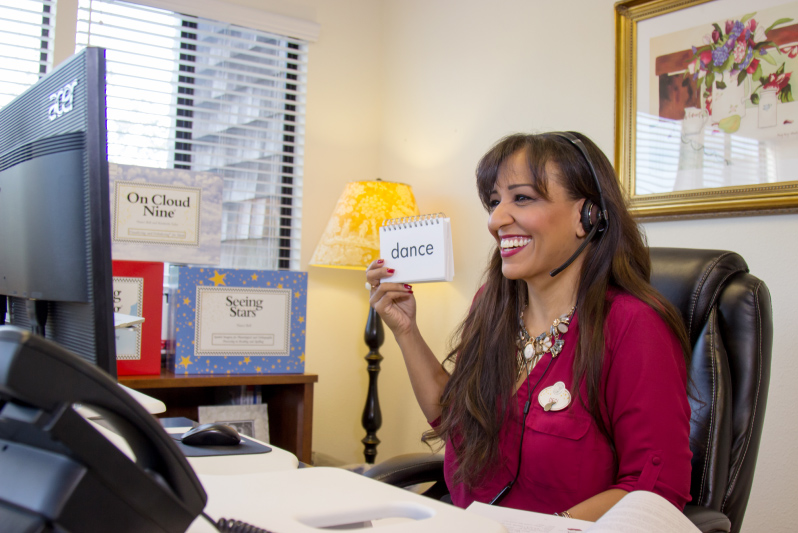
Lindamood-Bell offers professional development that helps educators implement fundamental skills for dyslexia intervention and reading remediation. These programs focus on structured, explicit instruction in the core components of reading and language comprehension, with an emphasis on classroom application and intervention settings. As a trusted leader, Lindamood-Bell partners with schools and districts to connect dyslexia screener insights to effective intervention strategies that drive measurable student growth.
Our founders’ programs are grounded in research and supported by evidence, including independent studies and district partnerships that demonstrate measurable gains in decoding, fluency, and comprehension. Educators learn to implement clear instructional routines with fidelity, monitor progress, and adjust lessons based on student response to instruction. This alignment between literacy screener data and targeted intervention strategies positions teachers to deliver the right instruction at the right time.
Lindamood-Bell Professional Development Workshops are interactive and flexible, delivered live online to support active learning and immediate feedback. Educators engage in modeling, guided practice, and lesson planning to translate research into daily instruction. Schools can select formats that fit their schedules, from introductory workshops to deeper implementation coaching across the school year. Materials related to Lindamood-Bell workshops are available from Gander Publishing.
By combining high-quality training with ongoing support, Lindamood-Bell helps schools build capacity for early screening, follow-up, and targeted intervention. Students identified through a dyslexia screener receive effective, timely support aligned with best practices, and teachers gain the tools to sustain progress across grades.
How Lindamood-Bell Stands Out

Lindamood-Bell stands out by helping schools turn screening data into effective instruction that drives meaningful reading growth. Our approach connects the findings of a dyslexia screener to instructional decisions, ensuring that every student receives intervention strategies aligned to their learning profile. We prioritize clarity and consistency so educators can confidently deliver instruction that builds phonological awareness, decoding, fluency, and comprehension.
- Evidence-based: Lindamood-Bell’s approach is grounded in the cognitive science of learning and aligned with the Science of Reading and Structured Literacy.
- Practical classroom routines: We support educators in translating literacy screener data into daily lesson plans and small-group instruction.
- Implementation support: Coaching and fidelity checks help ensure instruction remains consistent and responsive to student progress.
- Scalable options: From single schools to multi-site districts, we offer flexible pathways that align with MTSS and work within existing schedules and staffing models.
- Family engagement: We provide resources that help families understand screening results and support learning at home.
Whether you are launching a new universal screening initiative or refining an existing system, our team can help you connect the dots between a dyslexia screener, a literacy screener, and day-to-day teaching practices. The result is a cohesive plan that turns data into action.
Frequently Asked Questions
How is a dyslexia screener different from a diagnostic evaluation?
A screener is a brief, universal measure that identifies risk for reading difficulties associated with dyslexia. It does not diagnose. A diagnostic evaluation is a comprehensive assessment conducted by qualified professionals to determine whether a student meets criteria for dyslexia and to identify specific instructional needs.
Can students with dyslexia learn to read fluently?
Yes. With structured, explicit, and systematic instruction that addresses the sensory-cognitive foundations of reading, most students make substantial gains in decoding, fluency, and comprehension. Fluency often improves over time as accuracy stabilizes and students practice with connected text.
Are the programs used by Lindamood-Bell suitable for all grade levels?
Yes. Instruction is tailored to each student’s profile. Programs can be adapted for early learners through secondary students and beyond.
How long does intervention take to show results?
Many students show measurable growth within 80–120 hours of targeted, intensive intervention. The pace varies based on the student’s starting point, frequency of sessions, and fidelity of implementation. Consistent practice and data-informed adjustments accelerate progress.
Our Experience with Schools
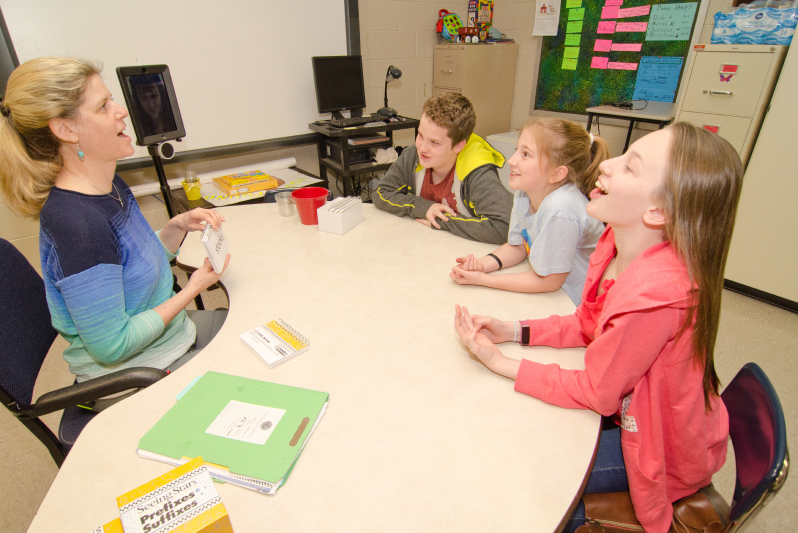
Lindamood-Bell’s approach has been implemented in thousands of school systems nationwide, supporting struggling readers and students with dyslexia since the 1990s. Our programs are grounded in the cognitive science of learning and supported by a robust body of research, including peer-reviewed studies and school and district case studies demonstrating significant gains in reading achievement.
Examples of this work include:
- District-wide K–2 instruction and K–12 dyslexia initiatives: Accelerating student learning in Fort Smith Public Schools, Arkansas.
- Peer-reviewed research: Rewiring the Dyslexic Brain with Seeing Stars® intervention
- Profiles of Success: Learn how districts have strengthened professional learning to implement evidence-based reading practices aligned with the science of reading. Watch the webinar.
Get Started with Lindamood-Bell

If your school is ready to connect screening data to daily instruction, Lindamood-Bell can help. We support teams in selecting and interpreting dyslexia and literacy screener tools, establishing effective data routines, and implementing targeted intervention strategies that lead to measurable results. From live online workshops to embedded coaching, our professional learning equips educators with the knowledge, tools, and confidence to make an immediate impact.
Get in Touch to learn how we can partner with your school or district. Together, we will design a plan that turns assessment insights into effective instruction and meaningful support for students with dyslexia. We look forward to working with you to help all students become skilled, confident readers and reach their full learning potential.
 ×
×