

post
BLOG AND NEWS

Is Reading a Challenge? This Can Really Help.

Sep 23, 2015


Some students can understand easily when someone else is reading or while listening to books on tape. But when they read themselves, they complain that it’s boring, or that it takes too long, often leading to high levels of frustration and angst for both parents and students.

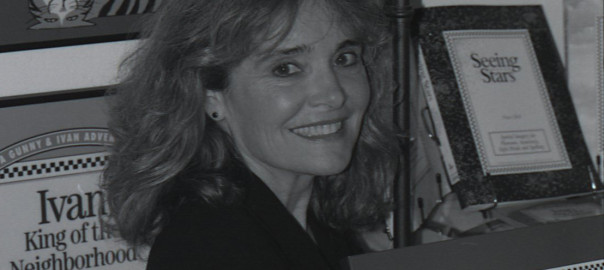
Students who have a hard time with reading often have a weakness in their ability to hold on to patterns of letters in their mind’s eye. For example, they may read “answer” as “an-swer” instead of “anser” or “knife” as “k-nife” instead of “nife.” This can occur when a student has weakness in symbol imagery – the ability to visually image the letters in words. Here’s an excerpt from Nanci Bell’s book, Seeing Stars, to help you further understand symbol imagery’s role in the reading process:

Sitting in the living room in front of the fire, school work piled around me. I heard my mother coming into the hall, then heading for the stairs. Now was a good time to ask her; then I wouldn’t have to look it up in the dictionary. She can spell anything.

“Mom, how do you spell “tomorrow?”

Her footsteps never missed a beat, she rattled off some sort of rapid, foreign speech, “TEEOHEMOHDOUBLEAUROHDOUBLEYOU.”

Eyes blinking and searching the universe for some sense, I said, “WHAT?”

As she crested the top of the stairs, Martian speech came at me again, “TEEOHEMOHDOUBLEAUROHDOUBLEYOU.”

Panicking, I yelled, “Wait Mom, I can’t get that. What did you say? T what?”

Footsteps came to a stop. I could picture her red hair and pretty-but-determined face as she turned toward me. “Listen Nanci. Pay attention.”

Why did I have to ask? Then in somewhat slower speech, I heard a careful, slightly impatient, “TEE-OH-EM-OH-DOUBLEAUR-OH-DOUBLEYOU.”

The haze starting to clear, images started to form, the Martian speech suddenly converted to my language. Oh, she meant T-O-M-O, but what was that letter coming after O? What is a DOUBLEAUR? Is it like a W? Then, I got it. Perception occurred. The haze was gone. Lucidity at last! She was saying a double R! Two R’s! Then an O. Then a W. T-O-M-O-R-R-O-W. I saw it.

Quickly I wrote it down before I lost it. Regaining my intellectual status with my mother suddenly became very important. “T-O-M-O-R-R-O-W. Thanks Mom, I have it.”

Unfortunately her footsteps didn’t become fainter, instead they started coming back down stairs. Uh-oh. In the hall, now the living room. Head down, Nanci. Keep your head down.

She was standing over me. “Nanci, how are you doing in spelling?”

Quick response, Nanci. Be confident. Fourth grade is easy. Show no fear or the lecture will start again. Why did I have to ask her for help? What was I thinking? “Fine Mom. I get A’s all the time. Hundreds. Every test. It’s easy for me.”

Too late, here it came. “Well, if they’d go back to teaching phonics in school, and doing spelling bees, kids wouldn’t have problems learning to read and spell. When I was in school, we had to learn the sounds for the letters, and that helped us sound out words, but we also did spelling bees. That’s why I can spell so well. Kids didn’t have problems learning to read and spell like they do now. Why don’t you have to do spelling bees anymore?”

“Uh, I don’t know Mom.” Head down. Keep your head down.

Undaunted, she continued in her usual passionate way. “Listen to me Nanci, we have to do spelling bees. We learned to sound out words and we also learned to see the words in our head. I just can’t understand why they don’t do that anymore.”

Vowing never, ever, to ask her to spell a word for me again, I muttered, “I don’t know Mom. I’ll never ask her again. I swear I’ll look it up. I swear.

I could feel her waiting for more, looking up at her, seeing her intensity, I sputtered, “We just don’t do that, Mom. But, I can sound out words.” (I had taught myself “phonics” by noting that certain letters in certain words seems to make certain sounds.) Please let this be over.

Sighing, she stayed for a few more seconds, then gave up and headed for the stairs to resume her mom-mission.

Never. I would never ask her again. Anyhow, I can never really understand her. Just yesterday I asked her how to spell the word necessary. Her response was a rapid N-E-C-E-double-S-A-R-Y. How does she get those letters out of her mouth that fast? And why can’t I get them in my head at the same rate that she says them? And, for heaven’s sake, why can’t I get that double thing she does? What a mystery.

Oh well, I’ll think about this tomorrow.

And she really did think about this again and again and again! It has become a passion of Nanci’s to educate people about the imperative need for and the use of symbol imagery in the reading process!

Click the link below to learnScreen Shot 2015-09-23 at 4.27.48 PM more about symbol imagery.
https://lindamoodbell.com/program/seeing-stars-program

Connect with us
🎉 40 Years of Changing Lives Through Learning

📖 1998: The Lindamood Phoneme Sequencing® (LiPS®) Program is published.

Lindamood-Bell co-founder and speech-language pathologist Patricia Lindamood and her daughter, Phyllis Lindamood, revised the Auditory Discrimination in Depth (ADD) program and published the Lindamood Phoneme Sequencing® Program for Reading, Spelling, and Speech (LiPS®).

The LiPS® Program helps students develop phonemic awareness by teaching them to discover and label the mouth movements that produce speech sounds. Students learn to identify and sequence sounds in words, then apply those skills to reading, spelling, and speech.

Follow along as we celebrate 40 years of changing lives through learning.

Learn more about Lindamood-Bell at the link in our bio, @lindamoodbellofficial.
“He took off when he learned to read.”

Waseem struggled with reading throughout school. Then, through Kentwood Public Schools’ partnership with Lindamood-Bell, he received Seeing Stars® instruction from a teacher trained in the program.

Today, Waseem is a fourth-year medical student.

Hear Waseem share his journey and the impact learning to read had on his life.
▶️ Watch the full video at the link in our bio, @lindamoodbellofficial.
🎉 40 Years of Changing Lives Through Learning

📚 1997: Two new programs become part of the Lindamood-Bell story.

Nanci Bell published Seeing Stars®, designed to develop symbol imagery, the ability to visualize letters and words for reading and spelling. Long overlooked in literacy instruction, symbol imagery addresses what is a missing piece for many struggling readers.

Nanci Bell and Kimberly Tuley also published On Cloud Nine® Math, designed to develop numerical imagery for number sense and mathematical reasoning.

Nearly 30 years later, both programs remain core to Lindamood-Bell instruction and our commitment to helping students learn to their potential.

Follow along as we celebrate 40 years of changing lives through learning.
Learn more about Lindamood-Bell and our instruction at the link in our bio, @lindamoodbellofficial.
October is Dyslexia Awareness Month 💙📚

For more than 40 years, Lindamood-Bell has helped students with dyslexia strengthen the skills needed for reading and learning.

Research shows what’s possible: with targeted, intensive instruction, students with dyslexia can make significant gains in reading, and studies have documented measurable changes in the brain systems that support reading.

Learn more about our approach, student outcomes, and the research behind our work. Follow the link in our bio, @lindamoodbellofficial.
🎉 40 Years of Changing Lives Through Learning

Our next milestone takes us across the globe!

🌏 1996: Our first international Seasonal Learning Center opens in Sydney, Australia.

This milestone meant more students and families could experience Lindamood-Bell instruction, helping students strengthen their reading skills and learn to their potential.

Follow along as we celebrate 40 years of changing lives through learning and the milestones that brought us here.

Learn more about Lindamood-Bell at the link in our bio, @lindamoodbellofficial.
🎉 40 Years of Changing Lives Through Learning

Our journey through 40 years of Lindamood-Bell continues with a milestone from 1993.

1993: The first Lindamood-Bell International Conference is held in Shell Beach, California.

In addition to program workshops, attendees had the opportunity to hear from professionals and scholars in the fields of learning, literacy, and cognition. Over the years, our International Conference has featured influential voices such as Allan Paivio, Jane Healy, and Temple Grandin, among many others.

Follow along as we continue celebrating 40 years of changing lives through learning and sharing the milestones that brought us here.

Learn more about Lindamood-Bell at the link in our bio, @lindamoodbellofficial.
🎉 40 Years of Changing Lives Through Learning

Our look back at 40 years of Lindamood-Bell continues with another milestone from 1992.

🏢 In 1992, Lindamood-Bell partnered with Motorola on a workplace literacy project designed to strengthen reading and comprehension skills for manufacturing associates and engineers. The project brought our approach to adult learners in a new setting and reflected something we still believe today: learning can happen at any age.

Follow along as we continue celebrating 40 years of changing lives through learning and sharing the milestones that brought us here.

To learn more about Lindamood-Bell click the link in our bio, @lindamoodbellofficial.
Attention Educators: Free Leaders in Literacy Webinar

Join Lindamood-Bell for Deeper than SoR: How One District Closed Gaps and Exited Students from Special Ed

📅 October 7, 2026 | 11 am PT / 2 pm ET / 7 pm BST

Hear how Madeira City Schools moved beyond scripted phonics instruction to build educator expertise, strengthen intervention, and improve outcomes for struggling readers and students receiving special education services.

Register now and bring practical insights back to your classroom, school, or district - Follow the link in our bio, @lindamoodbellofficial.
🎉 40 Years of Changing Lives Through Learning

Our next milestone takes us to 1992!

📍 1992: First Learning Center outside of San Luis Obispo opens in Sacramento, California

Six years after Lindamood-Bell was founded, we expanded beyond our San Luis Obispo roots with the opening of a Learning Center in Sacramento.

It was an important step in our growth, bringing Lindamood-Bell’s one-to-one, individualized instruction to more students and families.

Follow @lindamoodbellofficial as we celebrate 40 years of changing lives through learning and revisit the milestones that shaped our story. ❤️

Learn more at the link in our bio.
🎥 Now Available On-Demand: Online Instruction That Actually Works

When you think of online learning, you might picture large virtual classrooms where it can be difficult for students to stay engaged. Lindamood-Bell online instruction is a different experience: live, one-to-one instruction with individualized support and active student engagement.

See what an online session actually looks like and learn about the research and results behind our reading instruction.

👉 Watch the recording at the link in our bio, @lindamoodbellofficial.
🎉 40 Years of Changing Lives Through Learning
As we continue looking back at the milestones that have shaped Lindamood-Bell, we’re returning to where it all began.

📖 1986: Nanci Bell publishes Visualizing and Verbalizing®

The same year Lindamood-Bell Learning Processes was founded, co-founder Nanci Bell published Visualizing and Verbalizing for Language Comprehension and Thinking®, introducing an approach designed to develop concept imagery, the ability to create an imaged gestalt from language.

The program grew from Nanci’s work with students who could read words but struggled to understand, remember, and think critically about what they read.
Today, Visualizing and Verbalizing® remains central to our approach to developing language comprehension and higher-order thinking skills.

Follow @lindamoodbellofficial as we celebrate 40 years of changing lives through learning. ❤️
Learn more at the link in our bio.
🎧 New Podcast Episode!

Lindamood-Bell for Schools Director of Development Dave Kiyvyra speaks with Winifred Winston and LeDerick Horne from the Black and Dyslexic podcast about the dyslexia identification and support gap.

They explore disparities in dyslexia identification, limited access to effective reading instruction in many communities, and the challenges families face in understanding and securing the support their children need.

Listen and subscribe at the link in our bio, @lindamoodbellofficial.
📚 When should kids start reading?

Our latest blog article explores typical reading milestones, signs of readiness, the foundational skills that support reading and comprehension, and when additional support may be helpful.

👉 Read “When Should Kids Start Reading? Age Guidelines, Readiness Signs, and How to Help.” Follow the link in our bio, @lindamoodbellofficial.
Request Information

Request Information

When you complete our form, we'll send you to our digital information packet and reach out to you shortly.
You may also call us at

Schedule a Learning
Ability Evaluation

Please fill out the form and we will be in touch to schedule an evaluation.