




Math Remediation: A Comprehensive Approach to Supporting Your Child’s Learning
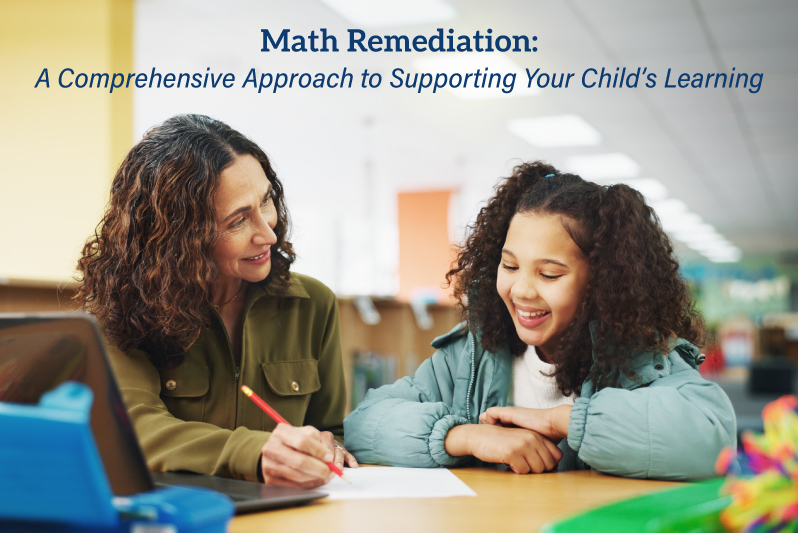
When a child struggles with math, it can be confusing and deeply concerning for parents. You may notice in your child frustration during homework, avoidance of math-related tasks, or a growing lack of confidence—even if your child is capable and successful in other subjects. Math challenges are common, but for some children, they are persistent and interfere with academic progress and self-esteem. This is where math remediation becomes essential.
Math remediation is not about doing more of the same practice or pushing students to memorize procedures they don’t fully understand. Instead, it is a targeted, structured approach that identifies why a child is struggling and rebuilds the foundational skills necessary for lasting understanding. At Lindamood-Bell, instruction integrates imagery with language to enhance math skills. This evidence-based approach helps students connect math concepts with verbal reasoning, enabling them not only to solve problems but also to understand the processes behind them. By emphasizing both mathematical reasoning and computation, instruction builds a strong foundation for math learning.
For families asking what math remediation is and how it differs from tutoring or short-term interventions, this guide explains how math remediation works, why it matters, and how it can help children move from frustration to clarity—and from avoidance to confidence.
Understanding Math Remediation

Math remediation is a structured instructional process designed to address gaps in math understanding that prevent students from meeting grade-level expectations. Rather than reviewing entire curricula, math remediation diagnoses specific breakdowns in learning and provides targeted instruction to rebuild essential foundations.
Math learning is cumulative. When students have gaps in number sense, place value, math vocabulary, or problem-solving strategies, new content becomes increasingly difficult for them. For many students, these gaps are not apparent at first—until math suddenly feels overwhelming. Many attempt to compensate by memorizing steps without understanding, which often leads to confusion, errors, anxiety, and general frustration surrounding Math concepts. Math remediation interrupts this cycle by focusing on the “why” behind math concepts and the “how” of effective strategies.
At Lindamood-Bell, math remediation also helps students catch up by rebuilding skills that may have been impacted by learning disruptions, inconsistent instruction, or ongoing learning challenges. Rather than rushing through missed material, instruction focuses on strengthening foundational understanding so students can move forward with clarity and confidence. The goal is not just short-term improvement, but long-term success built on a genuine understanding that brings joy and confidence as students finally grasp math concepts.
Why Children Struggle With Math

Many parents wonder why math seems especially difficult for their child. Often, math struggles are not about effort or intelligence, but about how a child processes numbers and mathematical relationships. A common underlying factor is weak concept imagery.
In math, Concept imagery refers to the ability to create clear mental pictures of numbers, quantities, and mathematical relationships. When concept imagery is weak, math can feel abstract, disconnected, and hard to remember. This may show up as:
- Weak math test scores
- Difficulty with word problems
- Unstable math facts
- Mixing up the signs
- Errors in basic computation
- Confusion with place value
- Unable to apply math to real life
- Unable to see/notice patterns
Without strong imagery, students may rely on rote memorization without understanding. Over time, this leads to frustration, avoidance, and declining confidence. Math remediation directly addresses these challenges by strengthening imagery and connecting it with language and reasoning.
Signs Your Child May Need Math Remediation

Knowing when to begin math remediation can make a meaningful difference. Consider targeted support if your child:
- Struggles to remember basic math facts despite repeated practice
- Makes frequent errors in addition, subtraction, multiplication, or division
- Feels overwhelmed by word problems
- Has difficulty grasping new concepts like fractions or decimals
- Avoids math tasks or shows signs of anxiety
- Is falling behind grade-level expectations
These indicators suggest that additional practice alone may not be enough. Math remediation focuses on rebuilding understanding, not just improving performance.
The Importance of Early Math Remediation

Early intervention can be a powerful factor in math remediation. Because math builds on previous learning, small gaps can grow quickly if left unaddressed. Some children appear to manage early math, only to struggle later when concepts become more abstract.
If you’ve noticed your child is struggling with math, it may be time to seek help and assess their learning skills. Early intervention can bridge the learning gap and build a solid foundation in math.
Math remediation in the elementary years helps prevent long-term difficulties by strengthening foundational skills early. That said, math remediation is effective at any age. Middle school, high school, and even college students can benefit from instruction that rebuilds core understanding. Parents often notice that once math remediation begins, confidence improves alongside skills. When math starts to make sense, motivation naturally increases.
Foundational Skills Strengthened Through Math Remediation

Math remediation focuses on developing the essential skills that support all future math learning. When this foundation is in place, students are better able to understand new concepts, solve problems, and apply math confidently in the classroom.
On Cloud Nine® math uses a structured, concept-imagery-based approach to develop mathematical understanding. Through the development of concept imagery, students learn to “see” math in their minds, enabling them to understand math facts, math vocabulary, problem-solving, and the application of math concepts to real-life situations.
Math Remediation vs. Tutoring: What’s the Difference?
Parents often ask how math remediation differs from tutoring. While both can be helpful, they serve different purposes.
Tutoring typically reinforces current classroom content, helps with homework, or prepares students for tests. It assumes foundational skills are already in place.
Math remediation, on the other hand, addresses the root causes of difficulty. It involves diagnostic assessments, structured instruction, and systematic practice to rebuild the skills that support learning. When a child continues to struggle despite extra help, remediation is often the more effective starting point.
Personalized Learning: A Key to Effective Math Remediation

High-quality math remediation is always personalized. Instruction must be tailored to individual needs so that time and effort are focused where they will have the most significant impact.
At Lindamood-Bell, math remediation begins with a Learning Ability Evaluation, which identifies strengths, weaknesses, and priority areas for instruction. This assessment-driven approach ensures that teaching targets the skills that matter most.
Personalized math remediation plans include:
- Clear learning goals
- Targeted instruction aligned to student needs
- Flexible pacing based on skill development
- Frequent checks for understanding
- Ongoing progress monitoring
This individualized approach supports both skill development and confidence, making math remediation more effective and more encouraging for students.
What Sets Lindamood-Bell’s Math Instruction Apart?

The On Cloud Nine®: Visualizing and Verbalizing for Math program seamlessly integrates imagery with language to enhance math skills. This evidence-based approach allows students to connect math concepts with verbal reasoning, enabling them not only to solve problems but also to deeply understand the processes that underlie them. By emphasizing both mathematical reasoning and computation, instruction builds a robust foundation for math learning.
How On Cloud Nine Differs from Typical Math Instruction Approaches
On Cloud Nine differs from many math programs that emphasize one primary approach.
Conceptual Understanding Instruction
This approach focuses on explaining why operations work as they do.
On Cloud Nine starts each step with activities that ensure the student understands the why behind the step or operation, building meaning before expecting performance.
Procedural Fluency Instruction
This approach focuses on giving students a series of steps they need to follow to solve problems.
On Cloud Nine guides students through the steps needed to solve problems, ensuring they can visualize and verbalize both the concepts and the specific steps—so procedures are understood, not memorized.
Spiral Scaffolding
This approach introduces a concept to a certain level (not very deep), moves on to other topics, and then returns later to review and practice previously introduced topics. On Cloud Nine encourages overlapping steps, so students are not required to reach 100% mastery of one step before beginning the next. This supports stronger connections across skills and reduces learning gaps.
Mastery
This approach seeks to build a complete set of knowledge before moving on to a new step or topic.
Again, On Cloud Nine encourages overlapping steps. This supports effective pacing by keeping students challenged without becoming too frustrated or overwhelmed—aligning with the zone of proximal development.
On Cloud Nine Key Areas of Focus
Mastering Essential Math Facts
By developing the imagery-language foundation, students learn how to visualize and retain crucial math facts, ensuring they can confidently recall and apply this knowledge in various contexts.
Enhancing Problem-Solving Skills
By combining concept and numerical imagery with language, students strengthen their ability to tackle word problems with clarity and confidence, using effective strategies for success.
Deepening Understanding of Math Concepts
This approach goes beyond mere computation, fostering a genuine understanding of the “why” behind math concepts. Deeper comprehension lays strong groundwork for future learning and application.
At Lindamood-Bell, students receive tailored support that addresses their unique needs and learning styles. Our mission is to help each student succeed in math while developing the skills and confidence to excel in the classroom and beyond.
Learn how On Cloud Nine math remediation can lead to lasting skill development:
Frequently Asked Questions

What is the difference between remediation and tutoring?
Remediation rebuilds core understanding and addresses underlying skill gaps through diagnostic assessment and structured instruction. Tutoring typically reinforces current classroom material. Math remediation targets foundational issues to create lasting improvement.
Can math remediation help students with dyscalculia or learning differences?
Yes. Math remediation adapts instruction to individual learning profiles and emphasizes multisensory methods, concept imagery, and explicit teaching.
Is online math remediation effective?
When delivered with live instructors, structured yet interactive lessons, and ongoing progress monitoring, online math remediation can be highly effective. Quality instruction matters more than format.
Getting Started with Lindamood-Bell: Take the Next Step Toward Math Confidence

Lindamood-Bell offers one-to-one in-person and online math instruction. Whether your child is just beginning to struggle or has faced math challenges for years, our math instruction can uncover root causes, rebuild foundational skills, and restore confidence. We focus on developing the imagery-language foundation students need to truly understand math—not just memorize it—through personalized support using the On Cloud Nine® program.
Contact us today to learn how Lindamood-Bell can support your child’s math journey. Get in Touch or call 800-300-1818 to get started.
 ×
×