




What Is ADHD and What Is Its Relationship to Learning? Insights for Parents
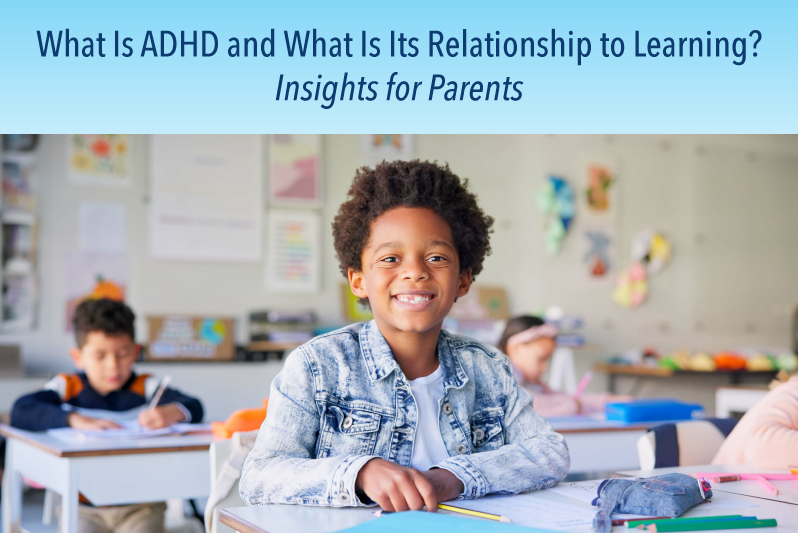
Attention-Deficit/Hyperactivity Disorder (ADHD) is a neurodevelopmental condition that affects both children and adults, often presenting as persistent patterns of inattention, hyperactivity, and impulsivity, all of which may impact learning. Specifically, ADHD can further complicate learning to read and comprehend. Individuals with ADHD often face challenges in maintaining focus, completing tasks, and managing impulses, impacting their academic, social, and personal lives.
But what is ADHD, exactly? Understanding this condition is key to providing effective support and tailored interventions. At Lindamood-Bell, we recognize the unique obstacles individuals with ADHD face and are committed to offering personalized interventions to enhance learning and academic development for those diagnosed with ADHD. In the following sections, we’ll explore what ADHD is, its relationship to learning, how it affects learning, available support options, and how to help improve learning outcomes for those with ADHD and other learning challenges.
Overview of ADHD

The Centers for Disease Control and Prevention (CDC) reports that attention-deficit/hyperactivity disorder (ADHD) affects approximately 11% of school-aged children in the United States, with symptoms often persisting into adulthood. The condition is diagnosed more frequently in boys than in girls, though research suggests that girls may be underdiagnosed due to differences in how symptoms present. Lindamood-Bell is dedicated to helping individuals with ADHD thrive in their educational journeys, should they also have learning challenges.
ADHD is classified into three types: Inattentive, Hyperactive-Impulsive, and Combined.
Inattentive ADHD:
The Inattentive type involves difficulties in sustaining attention and completing tasks, leading to careless mistakes.
Hyperactive-Impulsive ADHD:
The Hyperactive-Impulsive type is characterized by excessive fidgeting, restlessness, and impulsive behavior.
Combined ADHD:
The Combined type includes symptoms from both inattentive and hyperactive-impulsive categories, presenting a more complex challenge.
More About the Symptoms of ADHD

Common signs of ADHD include inattention, hyperactivity, and impulsivity. In children, this may manifest as difficulty focusing on tasks, excessive talking, or an inability to sit still. Adults may experience challenges with organization, time management, and maintaining attention in conversations or activities. These symptoms can vary in intensity and may change as a person ages.
The impact of ADHD symptoms on daily life can be profound. For children, struggles with attention and impulse control can lead to reading and academic difficulties as well as challenges in forming relationships with peers. They may struggle to complete homework or follow classroom instructions, affecting their self-esteem and motivation. For adults, the consequences may include challenges in the workplace, difficulties managing responsibilities at home, and strained relationships, leading to feelings of frustration, anxiety, and low self-worth. When coupled with reading difficulties, these issues may be further complicated.
Recognizing the signs of ADHD is the first step toward seeking appropriate support and intervention. Early identification and intervention can significantly improve symptoms and overall functioning. At Lindamood-Bell, we understand how ADHD can affect learning, making it harder for students to access their full potential. That’s why we offer differential instruction and customized interventions designed to help individuals address the causes of their difficulties.
How Does ADHD Impact Learning?

ADHD can significantly affect a student’s ability to learn by secondarily affecting their sensory-cognitive skills and challenging essential skills like focus, organization, and time management. Likewise, difficulty in learning may contribute to ADHD-type behaviors. If a deficit in reading and comprehension is diagnosed, attentional issues may be experienced. Many students with ADHD struggle to keep track of assignments, stay attentive during lessons, such as critical reading instruction, and plan effectively, making academic success more difficult.
Although ADHD is not classified as a learning disability, research shows that 30–50% of children with ADHD also have a specific learning disability, adding another layer of complexity to their educational experience. At Lindamood-Bell, we recognize that for some students, difficulties with decoding words or understanding oral and written language may additionally impact their ability to attend in the classroom. Our specialized instruction focuses on building the necessary sensory-cognitive foundational skills for reading and comprehension, enabling students to achieve success in their educational journey. Overall, we adhere to a Cognitive Science of Learning model to address the collective needs of individuals.
Qualified staff, support, and accommodations are necessary to support students with ADHD and learning issues. Tailor-made interventions, especially where language and cognitive processing issues are concerned, are also required to address these challenges. This is especially true where learning to read is necessary.
Co-Occurrence of ADHD and Other Learning Disabilities–What’s the Evidence?

Comorbidity is the simultaneous occurrence of two or more chronic issues in an individual. The co-occurrence of ADHD and multiple learning disorders presents additional challenges for children, affecting both their academic performance and overall development. The connection between ADHD and reading difficulty, especially dyslexia, is notable. In the study “Co-Occurrence and Causality Among ADHD, Dyslexia, and Dyscalculia” by van Bergen, de Zeeuw, et al, researchers used data from over 19,000 twin children and 2,150 siblings in the Netherlands Twin Register to investigate the intertwined nature of ADHD, dyslexia, and dyscalculia. The study findings suggest that while these conditions often co-occur, the majority of affected children have only one. However, approximately 25% of children with one condition also have another. Children with ADHD were found to be 2.7 times more likely to have dyslexia. The study underscores that co-occurrence is due primarily to overlapping genetic influences, not direct causal relationships.
This finding has important implications for educational and clinical practice: treating ADHD alone where there are co-occurring learning issues is unlikely to improve academic outcomes, and addressing only learning difficulties will not necessarily alleviate ADHD symptoms, but it may if the learning difficulties are remediated. Interventions should target each condition individually while maintaining a holistic understanding of the child’s overall needs.
Lindamood-Bell has been at the forefront of addressing and treating the co-occurrences of learning difficulties associated with ADHD in the children we serve. When we have examined how students with ADHD, language or cognitive processing deficits, or both conditions, perform before instruction, students with both ADHD and dyslexia may have significant difficulty with the basic building blocks of reading, what we refer to as sensory-cognitive processing. Sounding out words and/or imaging the letter sequences of letters in words, or visualizing concepts critical for language comprehension, may present additional difficulties. The students with ADHD exhibit more difficulties understanding what they read and with vocabulary development, skills that rely heavily on attention.
These findings highlight that each child’s profile is unique. Some may benefit most from support in decoding and fluency, while others may need additional help with comprehension and vocabulary development. Tailoring instruction to meet these individual needs can help every student succeed, including students with ADHD.
Lindamood-Bell’s Experience with ADHD

Lindamood-Bell has provided diagnoses and interventions to over 28,000 students using our sensory-cognitive programs, Seeing Stars and Visualizing and Verbalizing (V/V). Of these, 7,022 students (25%) who sought our intervention services had a prior ADHD diagnosis.
Over 10,000 students received intervention for decoding-only difficulties, 23% (2,440) of whom had ADHD. Among these, 53% also had a co-occurring dyslexia diagnosis. Given that some students with learning issues were also diagnosed with ADHD, as would be expected, they received more instructional hours on average than those without. Students with both ADHD and learning issues showed significantly different pretest profiles across all reading measures, such as accuracy, fluency, phonemic awareness, symbol imagery, word recognition, word attack, comprehension, and vocabulary. Despite these baseline differences, both ADHD and non-ADHD students demonstrated statistically significant gains on all measures after the Seeing Stars intervention, with large standard score gains in 7 of 8 areas.
Over 6,600 students received intervention for comprehension-only difficulties, with 27% (1,783) diagnosed with ADHD. Again, students with ADHD averaged more instructional hours and had significantly different pretest profiles in accuracy and fluency. Nonetheless, both groups showed statistically significant growth in comprehension following the Visualizing and Verbalizing intervention.
Additionally, more than 7,700 students received intervention for both decoding and comprehension difficulties, 28% (2,136) of whom had ADHD. Among these, 36% also had a dyslexia diagnosis. Again, ADHD students required more hours on average and had significantly different pretest profiles in accuracy, fluency, phonemic awareness, symbol imagery, and word recognition. However, after combined Seeing Stars and Visualizing and Verbalizing instruction, ADHD and non-ADHD students showed statistically significant gains across all reading measures.
Support for ADHD

Helping students with ADHD succeed requires a comprehensive approach that addresses their unique learning needs. Effective remediation involves very specific diagnostic procedures and interventions along with structured environments, clear and consistent instructions, and customized multisensory learning.
Collaboration between parents, teachers, and educational professionals is key to creating a strong support system. Parents advocate for their child’s needs, sharing Lindamood-Bell insights on effective home strategies, while we implement individualized learning plans that can address challenges and leverage strengths while working towards remediation. This teamwork ensures that students with ADHD receive the targeted support they need.
Our evidence-based transformative approach begins with a comprehensive Learning Ability Evaluation, which identifies underlying learning issues and clearly explains how to best support each student. Based on these insights, we design personalized instruction plans that target the root causes of learning difficulties, helping students build essential skills and confidence.
Discover how Lindamood-Bell can make a lifelong difference in your child’s education. Schedule a Learning Ability Evaluation today. Learn more and schedule an evaluation.
Improve Learning at Lindamood-Bell

Research shows that our instruction significantly improves academic outcomes for students with ADHD. By targeting the sensory-cognitive skills essential for reading and comprehension, we help students learn to their potential.
One powerful success story comes from Lindsay, a speech-language pathologist and mother, who watched her son Cameron struggle with literacy and attention issues. From the moment he started school, Cameron felt overwhelmed, and as he fell further behind, subjects he once loved—like science—were replaced with extra work that felt like punishment. Determined to find a solution, Lindsay turned to Lindamood-Bell. In this inspiring video, she shares how our instruction transformed Cameron’s learning ability, self-esteem, and overall happiness, positively impacting their entire family.
Watch Cameron’s Story:
If you’re seeking effective, research-based solutions for a student with ADHD, Lindamood-Bell is here to help. Our programs create lasting change, equipping students with the tools they need to succeed.
Get started today and discover how we can make a difference in your child’s learning journey.
 ×
×