


The science has never been more clear:
with the right instruction, every learner can reach their potential.
NEW RESEARCH | STANFORD UNIVERSITY, 2026
The Dyslexic Brain Can Change.
A study published in Nature Communications found that intensive, evidence-based reading instruction causes a key brain region—the visual word form area—to grow in children with dyslexia. Lindamood-Bell donated time and instructional resources to support this research. Children who received the instruction improved their reading by approximately one grade level in eight weeks—and their brains changed measurably in the process.
Four Decades. Hundreds of Thousands of Lives Changed.
40 years of research-based instruction
20+ peer-reviewed publications and counting!
5+ collaborative neuro-biological research projects with the University of Alabama, Birmingham; MIT; the University of Washington; Stanford; Georgetown University, and more!
Hundreds of thousands of students, educators & families served
88 Countries reached
Every Child Deserves the Chance to Learn
The Hope for Learning Scholarship Fund — Now Open
To mark our 40th anniversary, Lindamood-Bell is launching the Hope for Learning Scholarship Fund — a company-sponsored initiative to help students who demonstrate financial need and a strong fit for our instructional model access the instruction they need to reach their potential.
We believe every learner, regardless of financial circumstance, deserves the opportunity to thrive.
Applications are reviewed on a rolling basis. Eligibility is based on demonstrated financial need and fit with the Lindamood-Bell instructional model.
Forty Years In, Science Is Catching Up to What We’ve Always Known
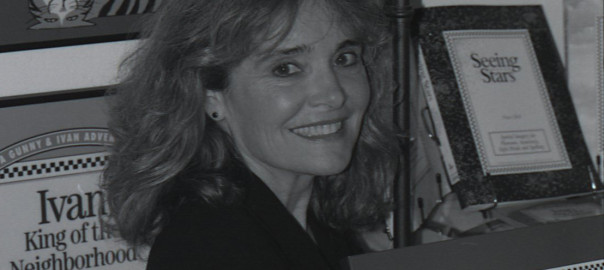
By Nanci Bell, Co-Founder & CEO, Lindamood-Bell
I have spent 40 years watching children learn to read.
I have watched children who were told they would “never be good readers” become fluent. I have watched students who had given up on themselves discover that they could, in fact, decode words, hold meaning, and love books. I have watched families go from fear to relief to joy—sometimes in a matter of weeks.
In 1986, when Pat Lindamood and I founded this company, the science of reading was still in its early stages. The connection between sensory processing, imagery, and the development of reading ability was not yet widely understood or accepted. We built our instructional methods on the foundational belief that reading is a sensory-cognitive act—that the brain must be able to see and feel the sounds and structures of language in order to decode and comprehend written words.
Forty years later, science is confirming what we have always believed.
What the Stanford Study Found
In February 2026, a research team led by Dr. Jason Yeatman at Stanford University published a landmark study in Nature Communications. The study used functional MRI scans to measure brain activity in children with dyslexia before and after receiving intensive reading instruction.
The researchers focused on a region of the brain called the visual word form area, or VWFA — a small but critical structure in the left visual cortex that, in typical readers, specializes in the rapid recognition of written words. Prior research had shown this region to be less active in people with dyslexia. This new study tracked children’s brains over a full year, across multiple scans.
What they found was striking. At the outset of the study, the VWFA was detectable in nearly all typical readers, but in fewer than two-thirds of children with dyslexia. Among children who did have a detectable VWFA, the region was smaller on average, and its size correlated directly with reading ability.
Then came the intervention. Forty-four children with dyslexia received intensive reading instruction over eight weeks. Their reading improved by approximately one grade level. And when the researchers scanned their brains again, something remarkable had happened: the VWFA had grown. It was detectable in more children. It was larger. The neural response to written words was stronger.
“The intervention is not only improving their reading, it’s also building the brain circuit. That’s very cool.”— Dr. Jason Yeatman, Stanford University
Lindamood-Bell was honored to donate time and instructional resources to support this research.
What This Means for Families
For parents of children with dyslexia, this research carries a message of genuine hope—not the vague, reassuring kind, but the scientifically-grounded kind.
It means that when a child struggles to read, that struggle is real and has neurological roots. It is not a matter of effort or intelligence. The brain of a child with dyslexia is genuinely different in a specific, measurable way.
But it also means that the difference is not fixed. With the right instruction, intensive, structured, and evidence-based, that region of the brain can grow. The gap can narrow. Reading can improve. And the neurological foundation for fluent reading can be built, even if it was not there to begin with.
This is not a promise that every child’s journey will be easy or fast. The Stanford study also found that even after significant reading gains, children with dyslexia still showed some differences compared to typical readers, and many continue to face challenges. But the direction of change is undeniable. For families who have been told their child’s struggle is permanent, this research is something worth holding onto.
Forty Years of Evidence
The Stanford study is the most recent chapter in a body of research that Lindamood-Bell has been part of for decades. Our earlier collaboration with the University of Washington produced four peer-reviewed studies demonstrating significant neurological and behavioral gains in decoding following symbol imagery instruction—even among individuals with dyslexia.
These studies share a common finding: that the brain responds to instruction. Literacy is not simply a trait some children are born with and others are not. The sensory-cognitive process of reading can be taught, built, and strengthened at any age, with the right approach.
Looking Ahead
Forty years is a milestone worth honoring, not because the work is done, but because the foundation is strong.
We are in an era when brain imaging can show us what instruction does inside the skull. Now, peer-reviewed research can confirm what classroom teachers and learning specialists have known for decades. The science of reading is no longer a niche conversation but a national one.
Lindamood-Bell has been part of that conversation from the beginning. And we intend to be part of it for the next 40 years.
Thank you for being part of this journey.
With gratitude,
Nanci Bell
Co-Founder & CEO, Lindamood-Bell
 ×
×