




post
BLOG AND NEWS

The Benefits of Reading Every Day

Sep 19, 2025


The benefits of reading every day are numerous, impacting various aspects of life for individuals of all ages. Whether your student is immersed in fiction, non-fiction, or poetry, consistent reading enriches their learning experience. The more they read, the more they expand their vocabulary, sharpen their comprehension skills, and gain a deeper understanding of the world. Whether they are diving into books or exploring other written materials, the positive impact of daily reading is both extensive and transformative.


At Lindamood-Bell, we recognize the importance of reading as a cornerstone of lifelong learning and personal growth. Our programs are designed to improve reading and comprehension skills, empowering your student to excel academically and beyond.


“Why Can’t I Skip My 20 Minutes of Daily Reading Tonight?”

reading every day

In the hustle and bustle of daily life, it’s easy to dismiss the importance of spending just 20 minutes a day reading. However, this small habit can significantly impact your child’s academic journey and future success. The difference between reading regularly and skipping those 20 minutes may seem insignificant in the short term but over time, the gap it creates in vocabulary, comprehension, and overall knowledge becomes vast.

Let’s take a look at the data:
reading every day benefits you

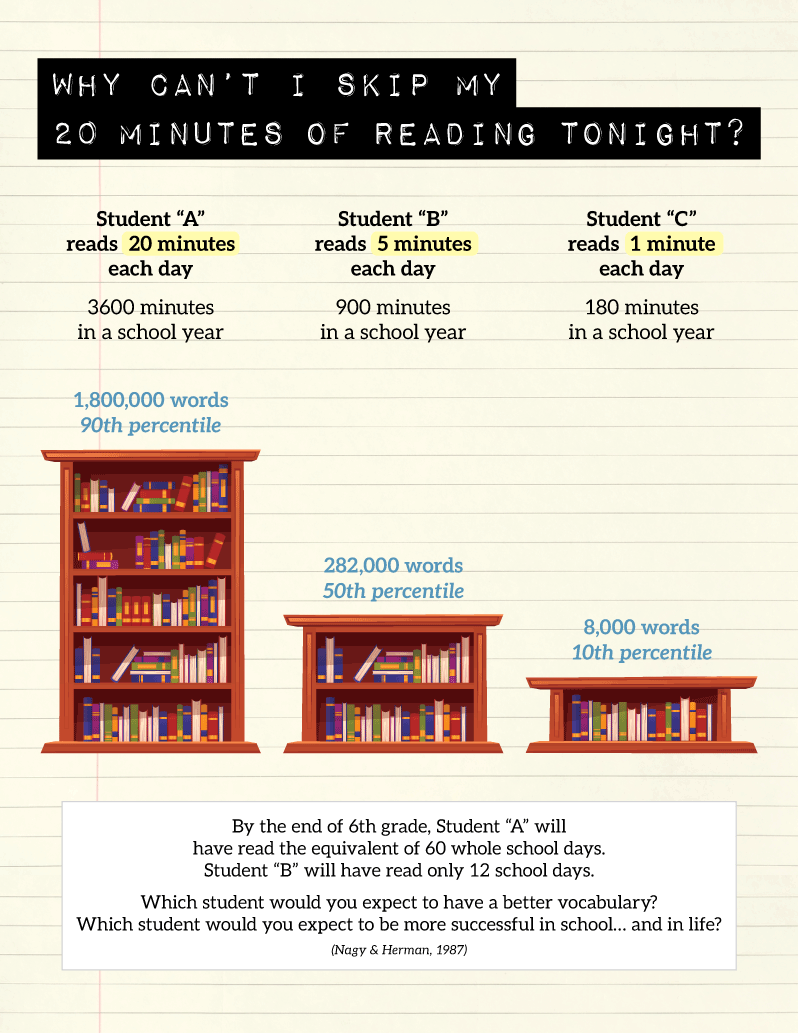
By the end of 6th grade, Student “A” will have read the equivalent of 60 whole school days. Student “B” will have read only 12 school days, and Student “C” will have read the equivalent of just three days. The differences in their academic and personal growth can be profound.

So, why can’t your student skip those 20 minutes of reading tonight? Because those 20 minutes are an investment in their future. The student who reads more learns more. They acquire a broader vocabulary and a deeper understanding of the world and improve comprehension. These advantages translate into greater success not just in school but in life. So, the next time you’re tempted to let your student skip reading, remember that the small, consistent effort adds up to big rewards.

Consider this: A student who reads for 20 minutes daily will accumulate 3,600 minutes of reading time over a school year, encountering around 1,800,000 words. In contrast, a student who reads for just five minutes daily will only read 900 minutes and about 282,000 words in the same period. The difference profoundly impacts their vocabulary, comprehension, and overall academic achievement.

Download your own Daily Reading flyer as a reminder to build healthy reading habits and to show your student why it is so important.

 

The Impact of Daily Reading

daily reading

Reading daily offers numerous benefits, impacting cognitive abilities, language skills, and overall understanding of the world. Teachers often recommend 20 minutes of reading daily as a simple yet powerful way to build these essential skills. Whether your child is just beginning to read or you’re encouraging your student to expand their knowledge, daily reading can significantly enhance their life. 

Broader Vocabulary


Daily reading exposes your student to a diverse range of vocabulary, sentence structures, and writing techniques. This not only expands their word knowledge but also enhances their writing and communication skills. Whether they’re diving into complex novels or informative articles, each encounter with new words enriches their language abilities, making it easier for them to express themselves clearly and effectively in both speech and writing.


Improved Comprehension Skills


Regular reading strengthens your student’s comprehension skills, enabling them to understand better and engage with complex texts. As they explore various genres and topics, they develop the ability to decode meaning, infer themes, and connect ideas within and across different pieces of writing. These skills are crucial for academic success and play a key role in making informed decisions in everyday life.


Deeper Understanding of the World


Reading expands your student’s perspective by exposing them to different cultures, ideas, and experiences. Through books and articles, they gain insights into diverse ways of thinking and living, which broadens their worldview. This deeper understanding fosters critical thinking, allowing your student to form well-informed opinions and engage thoughtfully with the world around them.


The Academic Impact of Daily Reading


Daily reading benefits cognitive abilities and language skills and significantly impacts your student’s academic success. As your student reads regularly, they

  • Develop strong reading skills, such as decoding and comprehending written text,
  • Enhance their critical thinking and problem-solving abilities, and
  • Improve overall academic performance by expanding their knowledge base and vocabulary.


Helping Reluctant Readers

help with reading and daily reading

Does your child seem to avoid reading at all costs, opting for any other activity instead? Are you constantly urging them to sit down and read, whether for school or for fun? Maybe they’ve even expressed a dislike for reading. For parents of reluctant readers, establishing a daily reading habit can be challenging, but even small efforts can lead to meaningful progress. The key is to identify and address the underlying reasons for your child’s reluctance—boredom with the material, difficulty understanding what they’re reading, or issues with reading skills.

Encourage Reading with Your Child’s Interests


Choose books that align with your child’s interests and consider pairing them with related activities. For example, if your child loves animals, visit the library after a zoo trip to find animal-themed books. This makes reading more engaging and relevant.


Promote a Positive Reading Environment


Set aside quiet times for reading and model this behavior yourself. Make sure reading is seen as a pleasant, shared family activity rather than a punishment. If there’s no school reading assigned, let your child choose their own books, like comic books, which can lead to new interests.


Address Comprehension and Decoding Issues


If your child struggles with understanding or decoding, they may need additional support. Weak concept imagery or difficulties with visualizing letters can affect reading. Identifying and addressing these issues is crucial to helping your child become a more confident and independent reader.

Ready to embark on your child’s learning journey? Read on to discover how our programs can support your student’s reading development and unlock their full potential. 


Improve Reading Comprehension and Learning Skills at Lindamood-Bell
help with reading at Lindamood-Bell

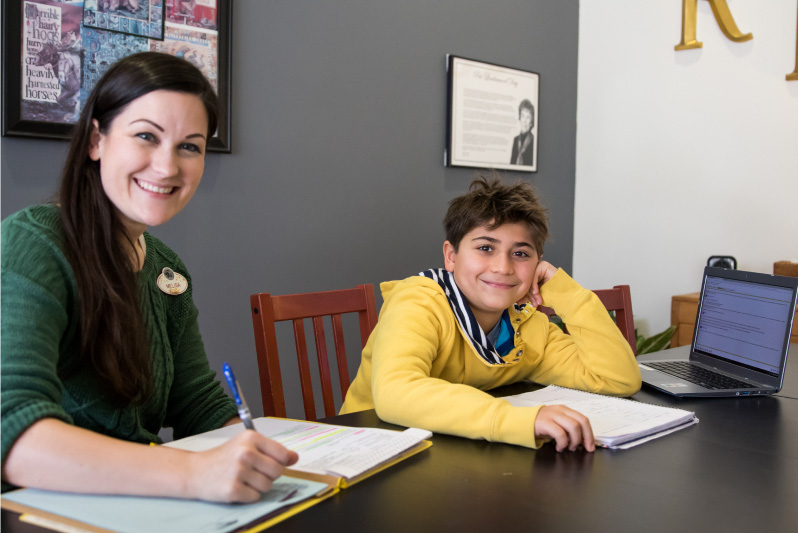
At Lindamood-Bell, we help students develop the skills necessary for effective reading and comprehension, ensuring they can fully enjoy the benefits of daily reading. Our unique, evidence-based instruction develops the sensory-cognitive processes necessary for reading and comprehension. Identifying and strengthening underlying sensory-cognitive processing issues can completely change your student’s learning skills. With these improved reading and comprehension skills, your student can experience a whole new world of rewarding and enjoyable reading. They will be able to understand and engage with texts more deeply, making reading a truly enriching experience.

Ready to embark on your child’s learning journey? Lindamood-Bell is here to support you. Our Learning Center will develop an individualized program of targeted instruction to help your child read and comprehend to their potential. Contact us or call 800-233-1819 to learn more and get started!



Connect with us
🎉 40 Years of Changing Lives Through Learning

Our next milestone takes us to 1992!

📍 1992: First Learning Center outside of San Luis Obispo opens in Sacramento, California

Six years after Lindamood-Bell was founded, we expanded beyond our San Luis Obispo roots with the opening of a Learning Center in Sacramento.

It was an important step in our growth, bringing Lindamood-Bell’s one-to-one, individualized instruction to more students and families.

Follow @lindamoodbellofficial as we celebrate 40 years of changing lives through learning and revisit the milestones that shaped our story. ❤️

Learn more at the link in our bio.
🎥 Now Available On-Demand: Online Instruction That Actually Works

When you think of online learning, you might picture large virtual classrooms where it can be difficult for students to stay engaged. Lindamood-Bell online instruction is a different experience: live, one-to-one instruction with individualized support and active student engagement.

See what an online session actually looks like and learn about the research and results behind our reading instruction.

👉 Watch the recording at the link in our bio, @lindamoodbellofficial.
🎉 40 Years of Changing Lives Through Learning
As we continue looking back at the milestones that have shaped Lindamood-Bell, we’re returning to where it all began.

📖 1986: Nanci Bell publishes Visualizing and Verbalizing®

The same year Lindamood-Bell Learning Processes was founded, co-founder Nanci Bell published Visualizing and Verbalizing for Language Comprehension and Thinking®, introducing an approach designed to develop concept imagery, the ability to create an imaged gestalt from language.

The program grew from Nanci’s work with students who could read words but struggled to understand, remember, and think critically about what they read.
Today, Visualizing and Verbalizing® remains central to our approach to developing language comprehension and higher-order thinking skills.

Follow @lindamoodbellofficial as we celebrate 40 years of changing lives through learning. ❤️
Learn more at the link in our bio.
🎧 New Podcast Episode!

Lindamood-Bell for Schools Director of Development Dave Kiyvyra speaks with Winifred Winston and LeDerick Horne from the Black and Dyslexic podcast about the dyslexia identification and support gap.

They explore disparities in dyslexia identification, limited access to effective reading instruction in many communities, and the challenges families face in understanding and securing the support their children need.

Listen and subscribe at the link in our bio, @lindamoodbellofficial.
📚 When should kids start reading?

Our latest blog article explores typical reading milestones, signs of readiness, the foundational skills that support reading and comprehension, and when additional support may be helpful.

👉 Read “When Should Kids Start Reading? Age Guidelines, Readiness Signs, and How to Help.” Follow the link in our bio, @lindamoodbellofficial.
🎉 40 Years of Changing Lives Through Learning

This year marks a very special milestone for Lindamood-Bell: 40 years!

Over the coming weeks, we’ll be looking back at some of the milestones that have shaped our story. From our beginnings in 1986 to the work we do today, there is so much to celebrate.

And where better to begin than at the beginning?

📷 1986: Lindamood-Bell Learning Processes is founded.

Pat Lindamood and Nanci Bell co-founded Lindamood-Bell with a shared belief that all students can be taught to read to their potential. From the beginning, our approach was grounded in the understanding that reading is a sensory-cognitive process and that the underlying skills can be developed.

What began 40 years ago has grown into a journey we’re excited to revisit and share with you.

Follow @lindamoodbellofficial as we celebrate 40 years of changing lives through learning and share more milestones from our story.

For more information about Lindamood-Bell, visit the link in our bio. ❤️
Considering online homeschooling for your child? There’s a lot to think about beyond curriculum and flexibility.

How will instruction be personalized? Will your child have live interaction with teachers? What kind of support and school community will they have? And will the program help strengthen the learning skills they need to succeed?

Our new guide explores what families should consider when comparing online homeschool programs and how Lindamood-Bell Academy approaches learning from home.

Read Online Homeschool Programs: A Guide for Families at the link in our bio, @lindamoodbellofficial.
New Podcast Episode!
Tom Mendoza, Co-Director of Lindamood-Bell for Schools, and Deci Douroux, Professional Development Mentor Presenter, explore how developing concept and numerical imagery can help close math achievement gaps.
They discuss a three-step instructional approach that moves students from hands-on experiences with manipulatives to imagery and language, then to computation and problem-solving. Learn how this approach can support stronger number sense, mathematical reasoning, and confidence.
Listen and subscribe at the link our bio, @lindamoodbellofficial
What’s the difference between Lindamood-Bell and Orton-Gillingham?

Our latest blog article explores the similarities and key differences between these approaches, including Lindamood-Bell’s emphasis on developing the sensory-cognitive processes that underlie reading, spelling, and comprehension.

Read the full article at the link in bio, @lindamoodbellofficial.
🎧 New Podcast Episode: A Parent’s Perspective on Lindamood-Bell Live-Online Instruction for Dyslexia
In our latest podcast episode, a mother shares her son’s journey with dyslexia and the impact personalized instruction had on his reading skills and confidence.
Through a combination of live-online and in-person reading instruction at our Learning Center, he developed the skills he needed to make meaningful academic progress.
Hear his story and his mother’s perspective on their Lindamood-Bell experience.
👉 Listen to the full episode at the link in our bio, @lindamoodbellofficial.
🍂 Fall workshops are here, educators!
Strengthen your teaching with live-online workshops grounded in the cognitive science of learning and aligned with the science of reading and structured literacy.
• Practical strategies for reading, comprehension, and math
• Support for students with dyslexia, ADHD, and autism
Save 10% with code 26READY2LEARN10.
Reserve your spot through the link in our bio, @lindamoodbellofficial.
Dyslexia is complex, but understanding its causes can help parents and educators make informed decisions about support. Our latest article explores what research tells us about dyslexia, common misconceptions, and the evidence behind effective intervention. Read more at the link in bio, @lindamoodbellofficial.
What is phoneme awareness, and why does it matter for learning to read?

Many people know phoneme awareness is important, but fewer understand how it fits into the bigger picture of reading development. Our latest blog explains what phoneme awareness is, how it differs from phonics, signs a student may need support, and why successful reading depends on more than phoneme awareness alone.
Whether you're a parent or educator, this guide offers practical insights into the sensory-cognitive functions that support reading.

Read the blog at the link in our bio, @lindamoodbellofficial.
Request Information

Request Information

When you complete our form, we'll send you to our digital information packet and reach out to you shortly.
You may also call us at

Schedule a Learning
Ability Evaluation

Please fill out the form and we will be in touch to schedule an evaluation.