



How to Teach a Student with Dyslexia: A Practical, Evidence-Based Guide
Teaching a student with dyslexia begins with a clear understanding of the underlying cognitive processes that support reading and language. Dyslexia is a neurobiological learning difference that affects the development of accurate and fluent word reading and spelling. Students with dyslexia may have weaknesses in the foundational sensory-cognitive processes needed for accurate and fluent reading, including phonemic awareness and symbol imagery, the ability to create mental imagery for letters and words.
This guide outlines the core components of effective teaching methods for students with dyslexia, how to help dyslexic students through assessment and targeted instruction, and how schools partner with Lindamood-Bell to provide research-aligned practices that improve reading ability. Explicit, intensive instruction that develops these underlying processes can lead to significant, measurable gains.
Key Takeaways
- Develop the underlying sensory-cognitive processes that support reading and spelling. Target phonemic awareness and symbol imagery (the ability to auditorily perceive and mentally image sounds in words) to strengthen decoding, spelling, word recognition, and reading fluency.
- Provide explicit, systematic instruction that responds to each student’s learning needs. Use a structured sequence of instruction, Socratic questioning, and ongoing practice to develop and strengthen skills. Instructors continually monitor student responses and adjust instruction in real time to support learning.
- Individualize the intensity and duration of instruction. Students with significant learning gaps may benefit from intensive, one-to-one instruction that targets their specific areas of need. Instructional pacing, frequency, and duration should be guided by each student’s learning profile and progress, with adjustments made as needed to accelerate growth.
- Use comprehensive evaluation and ongoing assessment to guide instruction. Identify each student’s strengths and areas of need through diagnostic testing, develop an individualized instruction plan, and monitor progress throughout instruction. Collaborate with families and educators to support skill development and meaningful academic progress.
Understanding Dyslexia and Its Impact on Reading

Dyslexia is a specific learning disability characterized by difficulties in word reading and/or spelling that involve accuracy, speed, or both. Challenges with phonological awareness, recognizing, segmenting, blending, and manipulating phonemes often make decoding unfamiliar words slow and laborious.
Difficulties may also occur in orthographic processing, including perceiving and recalling the identity, order, and sequence of letters within words. At Lindamood-Bell, instruction addresses this through the development of symbol imagery, the ability to create mental imagery for letters and words.
Common signs vary across stages of student development:
- Preschool: difficulty learning letter names and sounds; trouble recalling new words or nursery rhymes
- Early elementary: slow, inaccurate decoding; inconsistent recognition of high-frequency words; weak spelling; reluctance to read aloud.
- Upper grades: labored reading and writing; reduced output; spelling errors that persist; comprehension that declines when decoding demands are high.
For many students with dyslexia, slow or inaccurate decoding can interfere with comprehension. If the words on the page are not decoded accurately, it can be difficult to understand the meaning of the text. However, accurate decoding alone does not ensure comprehension. Some students can read words accurately and fluently but still struggle to understand, interpret, and think critically about what they read. Reading comprehension also depends on the ability to create mental representations of language, connect ideas, make inferences, and understand the text as a whole. At Lindamood-Bell, we recognize the importance of developing both symbol imagery for accurate, fluent word recognition and concept imagery for language comprehension and critical thinking. Addressing these underlying sensory-cognitive processes helps students develop the skills necessary not only to read the words on the page, but also to understand what they read.
Assessment and Individualized Instruction

Effective teaching and dyslexia support begin with a comprehensive assessment. Common measures include phonological awareness, letter-sound knowledge, decoding of real and nonsense words, oral reading fluency, and spelling. Early school-based screening can identify students who may be at risk and need additional assessment or intervention.
At Lindamood-Bell, the Learning Ability Evaluation measures skills related to reading, comprehension, and learning, and helps determine an appropriate instructional plan. Ongoing progress monitoring then helps instructors adjust pacing, intensity, and instructional focus in response to student performance. A Learning Ability Evaluation is not a medical or clinical diagnosis of dyslexia.
Coordinate a plan with teachers, reading specialists, special educators, and caregivers. Define program selection, session frequency and length, group size, and progress-monitoring checkpoints. Align classroom activities with intensive intervention so students can participate in grade-level learning while foundational skills grow. This individualized approach reflects best practices in teaching students with dyslexia and provides a roadmap for helping dyslexic students make steady progress.
When Students Need More Intensive, Individualized Reading Instruction

For some students with dyslexia, the gap between their expected reading level and their actual reading performance can be significant. A student may be several grade levels behind in decoding, word recognition, or reading fluency, making it increasingly difficult to keep pace with classroom expectations. When traditional classroom instruction or supplemental reading interventions have not produced adequate progress, a more intensive, individualized approach may be necessary.
Students with significant reading gaps often need more than additional practice or a continuation of the same instructional strategies. They may benefit from frequent, one-to-one instruction that directly addresses the underlying sensory-cognitive weaknesses affecting their ability to read accurately and fluently.
At Lindamood-Bell, intensive instruction is individualized based on each student’s assessed needs and response to instruction. Instructors continuously monitor performance and adjust pacing, questioning, and instructional focus to develop foundational reading skills and help students make measurable progress.
For students who have struggled for years, this targeted, intensive approach can provide an opportunity to accelerate skill development and begin closing the gap between their current reading abilities and grade-level expectations.
Evidence-Based Teaching Strategies and Lesson Components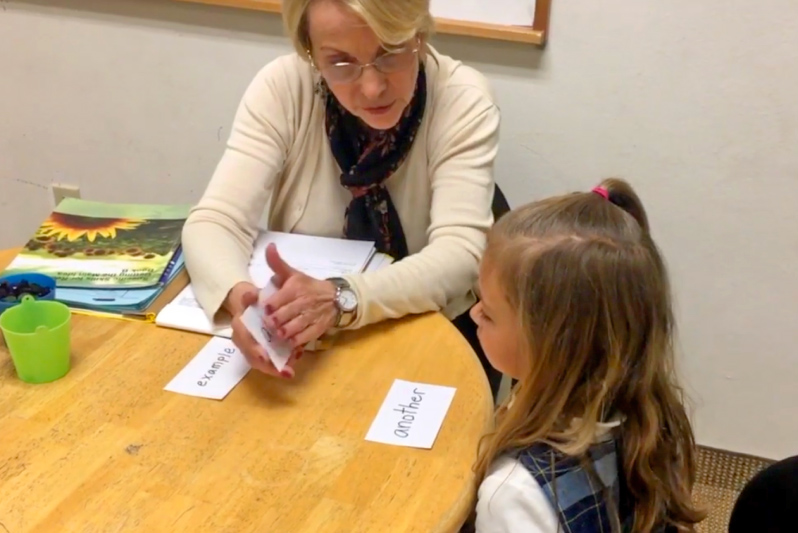
Instruction for students with dyslexia should be explicit, systematic, intensive, and responsive to student performance. The Seeing Stars® program, authored by Lindamood-Bell co-founder Nanci Bell, develops the sensory-cognitive processes needed for reading by integrating phonemic awareness with symbol imagery, the ability to create mental imagery for letters and words. Seeing Stars® is used in Lindamood-Bell instruction to support accurate decoding, orthographic mapping, fluent word recognition, and spelling.
Key areas of instruction include:
- Phonemic awareness: Developing the ability to perceive, identify, and manipulate individual sounds within words to support decoding and spelling.
- Symbol imagery: Developing the ability to visualize letters and letter patterns in words, strengthening orthographic processing, word recognition, spelling, and fluency.
- Decoding: Integrating sound and symbol information to accurately read unfamiliar words and recognize common orthographic patterns.
- Encoding (spelling): Connecting sounds with accurate mental representations of letters and letter patterns to support spelling and reinforce word recognition (A focus on spelling is secondary to the primary focus of decoding and comprehension).
- Fluency: Building accurate, automatic word recognition so students can read connected text with greater ease and devote more attention to comprehension.
The Seeing Stars® program explicitly and systematically develops these underlying processes while continually adjusting instruction to the student’s responses. Rather than relying on memorization or rules alone, students learn to integrate what they hear with what they visualize for letters and words, strengthening the sensory-cognitive foundation for reading.
Delivering intensive, daily instruction (1 to 4 hours per day) is also important for students who need significant intervention. Frequent, focused sessions help consolidate skills and accelerate progress. Content, pacing, and feedback should be individualized based on the learner’s performance, with immediate error handling and ongoing monitoring used to determine what the student needs next.
Lindamood-Bell provides professional development and ongoing support to help educators implement Seeing Stars® with fidelity, monitor student progress, and individualize instruction within the program framework. This support can help schools maintain consistent, evidence-based dyslexia intervention within a Multi-Tiered System of Support (MTSS).
Seeing Stars® Instructional Progression

Seeing Stars® instruction follows a systematic progression while remaining responsive to each student’s needs. Rather than following a fixed daily lesson template, instructors move through program steps based on student performance and mastery.
Seeing Stars® instruction may include:
- Developing symbol imagery for letters by strengthening the student’s ability to visualize, identify, and recall letters.
- Developing symbol imagery for sounds and letters by integrating phonemic awareness with visual representations of letters.
- Building symbol imagery for words to support accurate decoding, spelling, and orthographic mapping.
- Practicing word attack and word recognition to develop accuracy and automaticity with increasingly complex words.
- Applying these skills to connected text, with attention to accurate, fluent reading.
- Using ongoing student responses and progress monitoring to determine pacing, error handling, and the next appropriate instructional step.
As students develop stronger symbol imagery and increasingly automatic word recognition, fewer cognitive resources are required for decoding, allowing greater attention to be directed toward understanding the meaning of the text.
Case Study: Intensive Instruction and Measurable Gains
In the 2025–26 school year, Lindamood-Bell partnered with Pinellas County Schools to strengthen instruction for students with characteristics of dyslexia. The initiative centered on teacher capacity building and intensive, small-group intervention tailored to student data.
Educators engaged in job-embedded professional development that included initial workshops, asynchronous coursework, and interactive coaching. This sustained support improved instructional fidelity, sharpened data use, and refined lesson delivery—an effective model for teaching and dyslexia at scale.
Schools implemented Seeing Stars instruction to develop symbol imagery for phonological and orthographic processing—skills essential for accurate decoding and spelling. Students received frequent, structured lessons aligned to assessed needs and monitored with regular progress checks.
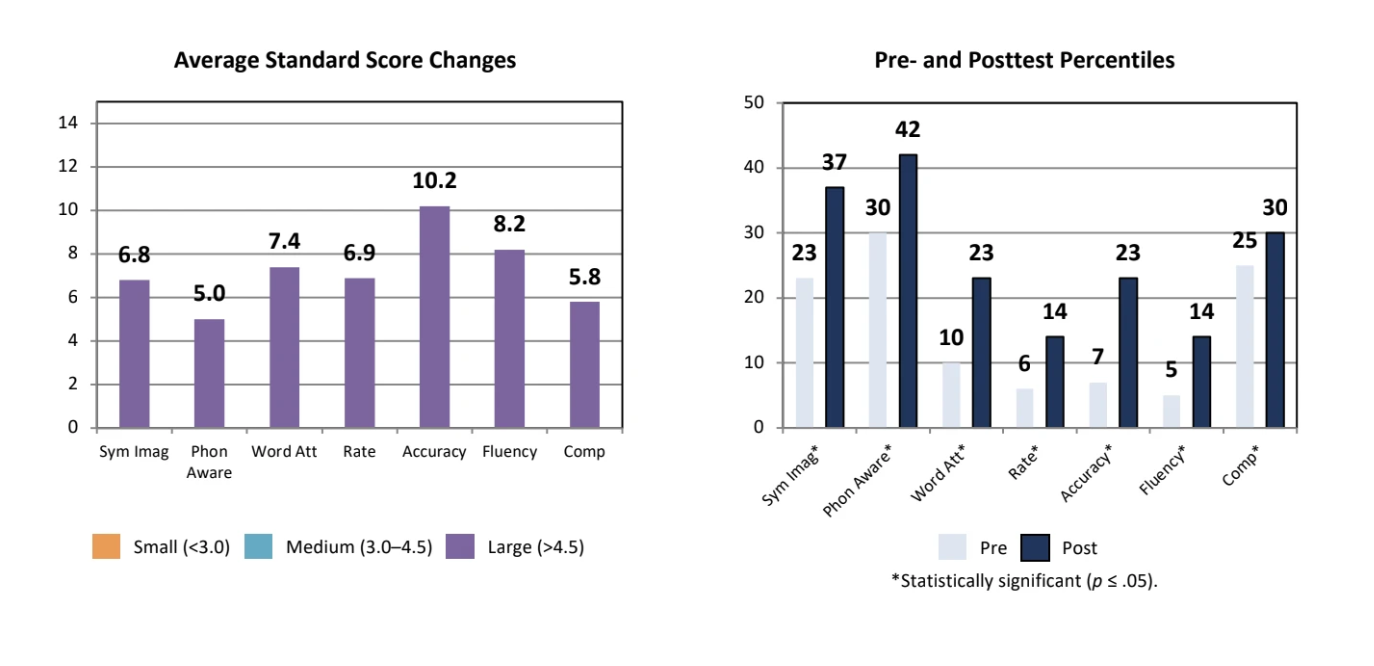
Across multiple reading measures, students demonstrated statistically significant growth, with large standard score gains on most metrics. Improvements in accuracy and fluency led to meaningful increases in reading comprehension, illustrating how to help dyslexic students make rapid and durable progress when instruction is intensive and aligned to underlying processes.
PROFILE
Number of Students: 45
Average Age: 9.9
Average Hours of Instruction: 106
Program Implemented: Seeing Stars®
Outcome Measures:
- Symbol Imagery Test
- Woodcock Reading Mastery Test-3rd (word attack)
- Wide Range Achievement Test-5th (reading and spelling)
- Gray Oral Reading Tests-4th (rate, accuracy, fluency, and comprehension)
Support for Students with Dyslexia through Lindamood-Bell
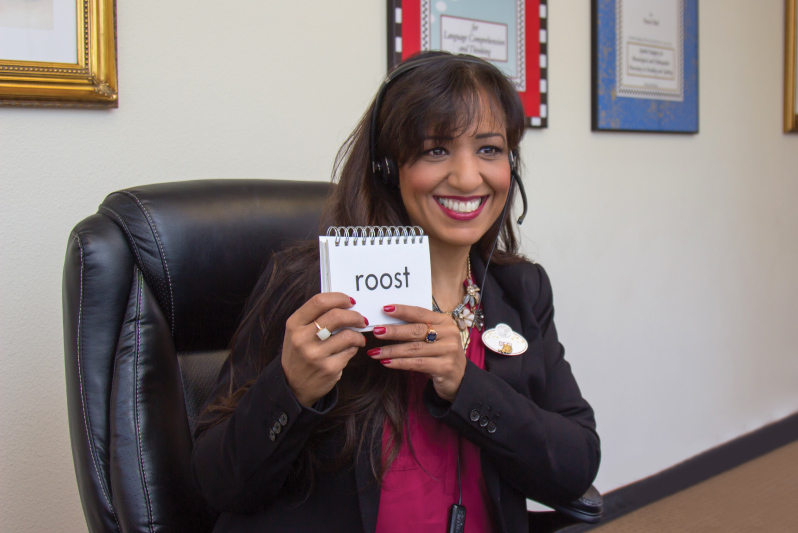
Support for Students with Dyslexia through Lindamood-Bell
For 40 years, Lindamood-Bell has been a trusted leader in literacy intervention and professional development, helping students with dyslexia and other learning challenges develop the skills needed for reading and comprehension. Our founders’ programs develop the sensory-cognitive processes that underlie learning, including phonemic awareness, symbol imagery, and concept imagery. Instruction develops these underlying processes and applies them to skills such as decoding, word recognition, spelling, fluency, and comprehension.
For schools and families exploring how to help students with dyslexia, our approach combines explicit, systematic instruction with individualized learning plans, ongoing assessment, and measurable outcomes.
Lindamood-Bell for Schools: Partnering with Educators to Improve Literacy Outcomes
Through Lindamood-Bell for Schools, we collaborate with schools and districts to implement research-based literacy solutions that address the needs of struggling readers, including students with dyslexia who have not responded adequately to conventional instruction.
Our partnerships are designed to meet the unique needs of each school or district and may include:
- Professional Development: Live, interactive workshops that equip educators with the knowledge and instructional skills to implement Lindamood-Bell programs.
- Comprehensive School Partnerships: Collaborative solutions that integrate professional development, instructional implementation, and ongoing support to improve student outcomes.
- Intensive Student Intervention: Individualized instruction for students with significant learning gaps who need more targeted support to develop foundational reading and comprehension skills.
- Ongoing Coaching and Support: Guidance, observation, and feedback to strengthen instructional fidelity, support educators, and monitor student progress.
Whether schools are strengthening Tier 2 and Tier 3 interventions, building educator capacity, or addressing persistent literacy gaps, Lindamood-Bell for Schools offers flexible partnerships focused on developing student learning abilities and achieving measurable results.
Lindamood-Bell Learning Centers: Individualized Instruction for Students with Dyslexia
Families seeking direct support for a child with dyslexia can access individualized, one-to-one instruction through Lindamood-Bell Learning Centers, with in-person and live-online options available.
Our instruction is designed to address the underlying causes of reading difficulties rather than focusing solely on compensatory strategies or repeated practice of academic skills. Specially trained instructors respond to each student’s learning needs in real time, using Socratic questioning and differentiated instruction to develop the sensory-cognitive processes necessary for reading and comprehension.
Intensive instruction is available in flexible options, allowing families to choose an approach that meets their child’s learning needs and schedule.
Learning Ability Evaluation: Understanding Each Student’s Learning Profile
At Lindamood-Bell, effective instruction begins with understanding how a student learns. Our comprehensive Learning Ability Evaluation identifies strengths and areas of need in reading, spelling, comprehension, and the sensory-cognitive processes that underlie learning.
For students with dyslexia, the evaluation provides valuable insight into the specific difficulties that may be affecting decoding, word recognition, reading fluency, and comprehension.
Results help our team develop an individualized instructional recommendation based on each student’s learning profile. Throughout instruction, ongoing monitoring and pre- and post-instruction testing provide objective information about progress and help guide instructional decisions.
Frequently Asked Questions
How long does it take to see progress?
The amount and intensity of instruction needed depend on each student’s learning profile, current skill level, and response to instruction. Progress is monitored regularly, so instruction can be adjusted based on student performance.
Should we wait for a formal diagnosis to begin support?
No. If screening indicates risk, targeted instruction can begin while a comprehensive evaluation is pursued. Early intervention can address areas of need and provide additional information about how a student responds to instruction.
What does high-dosage intervention look like?
High-dosage intervention involves frequent, focused instruction, often daily, in small groups or one-to-one. Instruction is explicit and systematic, with immediate feedback and regular progress monitoring. Intensity, pacing, and instructional focus should be responsive to each student’s needs.
How can parents support at home?
Encourage reading at an appropriate level, provide positive support, and follow recommendations from the student’s instructional team. Consistent communication between families and educators can help reinforce progress without introducing strategies that conflict with the student’s intervention.
What if a student is reading several grade levels below expectations?
Students with significant reading gaps may need intensive, individualized instruction that targets the underlying skills affecting reading performance. A comprehensive Learning Ability Evaluation can identify specific areas of need and help determine the appropriate instructional approach, frequency, and intensity. With targeted instruction and ongoing progress monitoring, students can develop foundational skills and work toward closing persistent reading gaps.
Partner with Lindamood-Bell

Lindamood-Bell provides evidence-based instruction using our founders’ programs to develop the sensory-cognitive processes underlying reading and comprehension.
Schools can partner with Lindamood-Bell to identify student needs, implement effective intervention, and build educator expertise through professional development, coaching, and ongoing implementation support.
Parents seeking help for a student with dyslexia can contact Lindamood-Bell to learn more about a Learning Ability Evaluation and individualized, one-to-one instruction designed to help students develop the skills they need to read and comprehend to their potential.
 ×